Weather Monitoring for Schools, Universities & Athletic Programs
Protect student athletes and campus communities with certified on-site weather data
School athletic directors, facilities managers, and administrators face a real liability risk every time they make a weather call — continue play or pull athletes from the field. A lightning strike three miles away looks the same on a consumer weather app as it does a half-mile from your stadium. Broad regional radar is not a policy. cyclonePORT gives schools and universities the certified, on-site weather data they need to make defensible decisions and fulfill their duty of care to students.
- Consult
We map your organization’s needs.
- Deploy
- Monitor
Why Schools & Universities Choose cyclonePORT
From high school athletic directors to university facilities directors, cyclonePORT provides the data infrastructure that underpins compliant weather policies:
- Lightning detection: Know the exact moment lightning enters your alert radius — not when a regional sensor 10 miles away detects it.
- Wind speed monitoring: Track conditions that affect outdoor events — from cross-country meets to graduation ceremonies.
- Heat & humidity: Wet bulb globe temperature (WBGT) inputs for NFHS and NATA heat acclimatization compliance.
- Timestamped data logs: Every sensor reading is recorded. If a weather incident occurs, you have documented data, not just a coach’s recollection.
- Multi-site management: A single district account can monitor data from multiple school campuses simultaneously.
- App-based access: Athletic directors, coaches, and facilities managers all see the same real-time data from any device.
⚠ Lightning Policy Liability Is Real
The NFHS Lightning Safety Policy recommends a minimum 30-minute delay after the last lightning observed within 8 miles. Compliance requires knowing when lightning occurred — not guessing.
cyclonePORT gives athletic programs documented, timestamped data to support every weather delay and resumption decision.
What You're Monitoring
cyclonePORT’s full sensor suite supports NFHS, NATA, and state athletic association weather policy compliance:
Specification | Detail |
Lightning Detection | Real-time proximity alerts — configurable evacuation thresholds |
Temperature | Ambient + wet bulb for WBGT heat stress calculations |
Relative Humidity | Continuous RH% — required for NATA heat index monitoring |
Wind Speed & Direction | Supports outdoor event planning and lightning tracking |
Barometric Pressure | Contextual storm system monitoring |
Precipitation | Real-time rain detection for field condition decisions |
Data Logging | Continuous timestamped records for documentation and compliance |
Multi-Site Dashboard | Monitor all campus locations from one unified platform |
Built for Severe Weather
The Pulse of the Sky
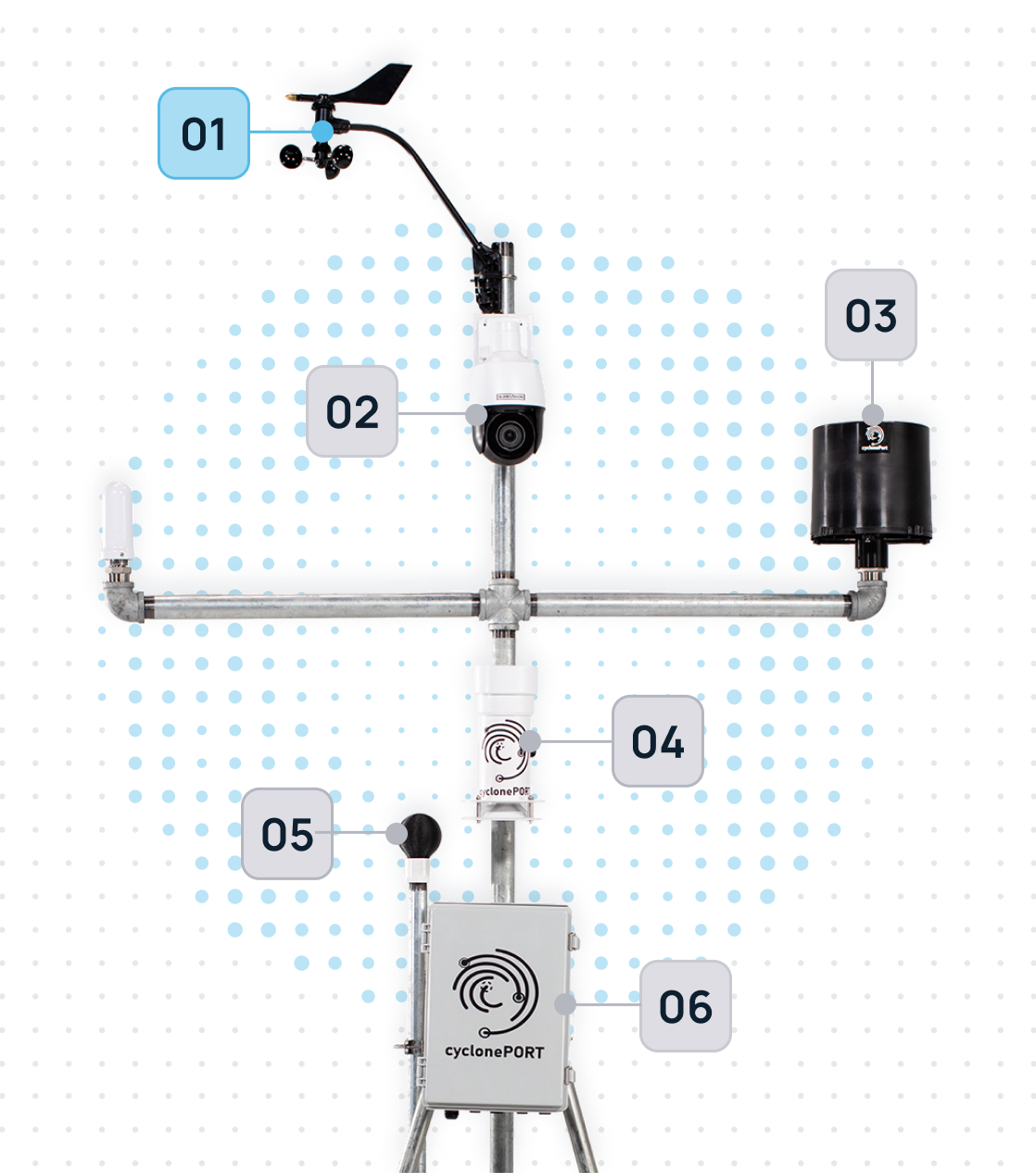
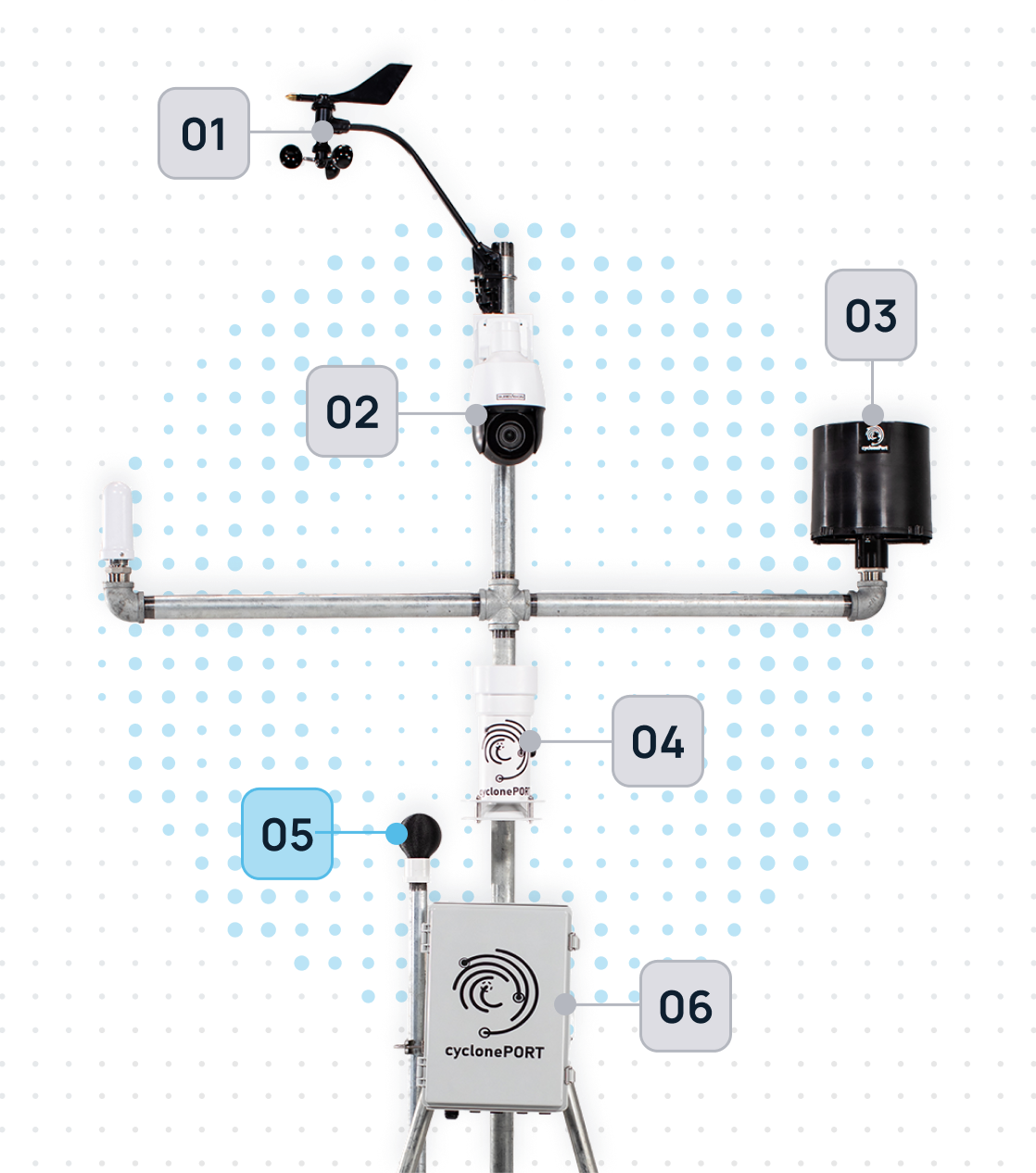
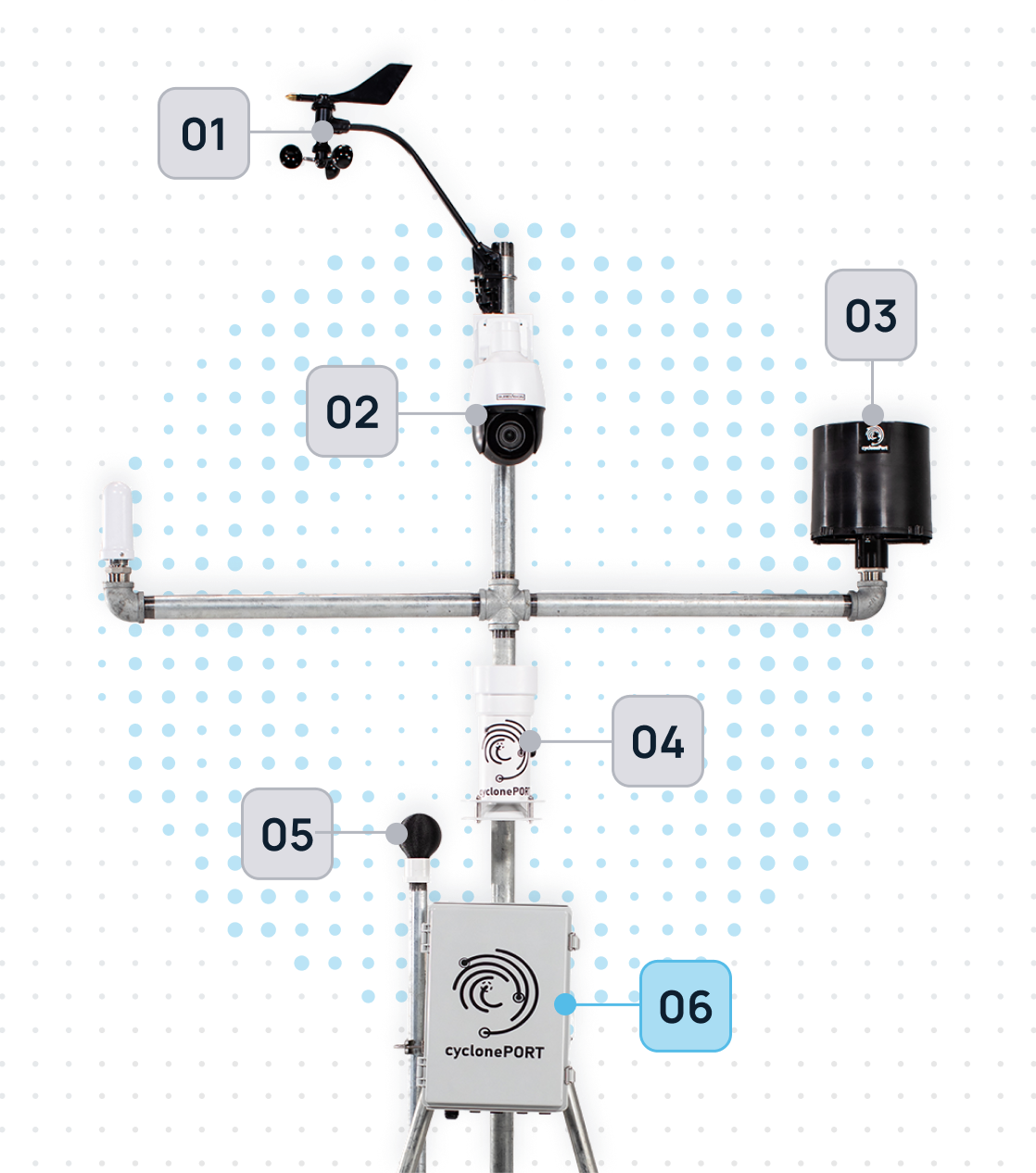
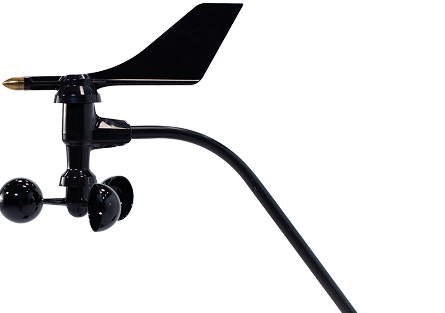
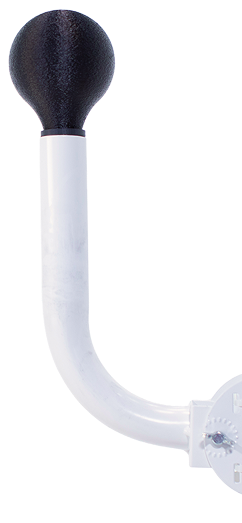
The anemometer is the “nervous system” of our weather stations. Moving beyond old-fashioned mechanical cups, our hardware utilizes ultrasonic sensor arrays to measure the velocity and direction of the wind. By calculating the time it takes for sound pulses to travel between sensors, it provides a lag-free, high-definition map of air movement.
The PTZ Observation Unit
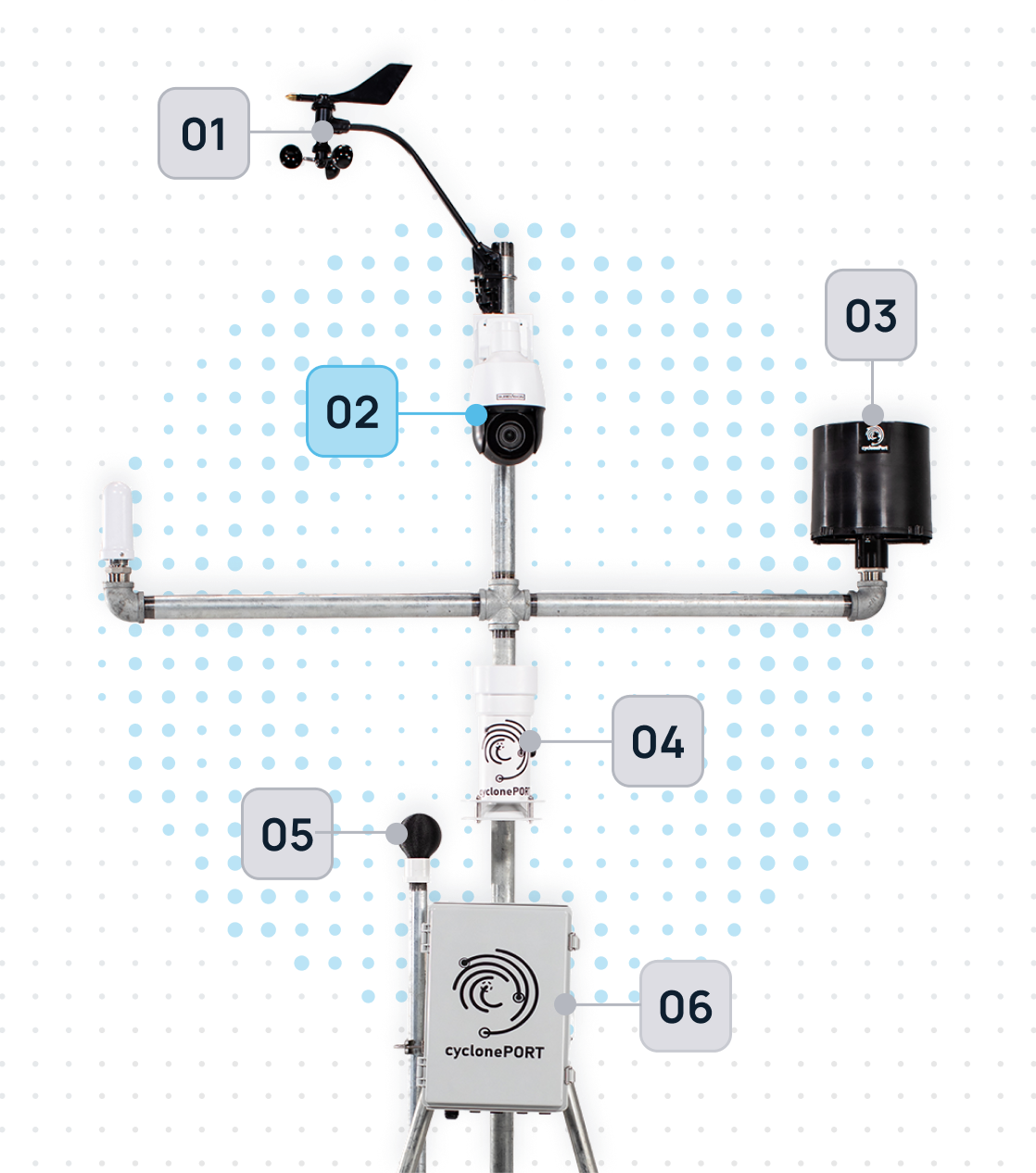
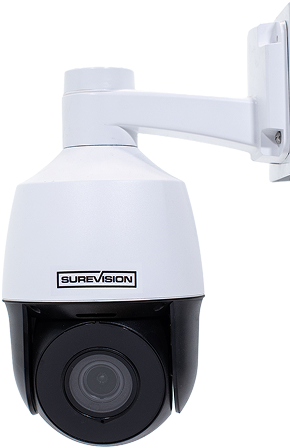
Our PTZ units are ruggedized optical sensors designed to withstand the very conditions they are monitoring. These aren’t just for recording video; they serve as a critical layer of visual ground-truthing. When our sensors detect a change in wind speed or pressure, the PTZ camera can automatically swivel to the point of interest—allowing us to see the formation of wall clouds, debris, or precipitation in real-time.
The lens moves vertically, allowing for a look at both high-altitude cloud formations and ground-level impacts
Liquid Precision: The Smart Rain Gauge
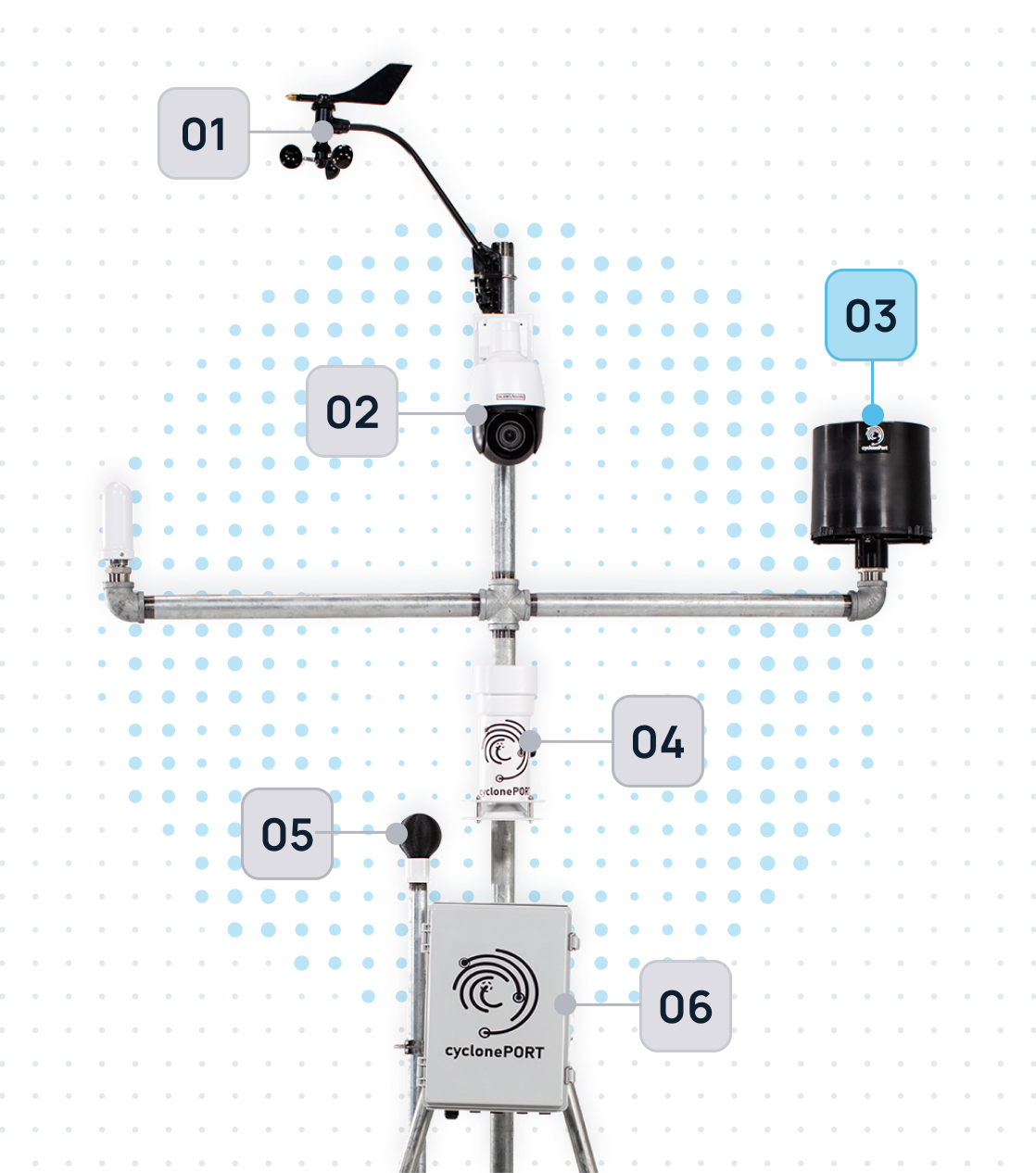
The rain gauge is the primary component for measuring precipitation intensity and accumulation. Our systems typically utilize “Tipping Bucket” or “Optical” technology to provide high-resolution data. As droplets enter the collector, the sensor logs the volume in real-time, allowing our AI to calculate rainfall rates per minute.
Resilience by Design: The Primary Sensor Housing
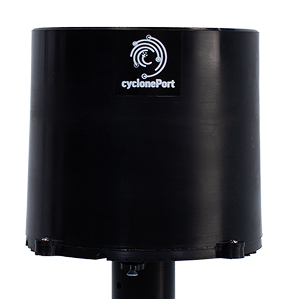
The Primary Sensor Housing is the ruggedized enclosure that integrates and protects the suite of meteorological instruments. It isn’t just a box; it is a precision-engineered environment. Designed with aerodynamic stability and thermal regulation, it ensures that internal components—like barometers, data loggers, and transmission hardware—stay dry, cool, and connected even in hurricane-force winds or sub-zero blizzards.
Human-Centric Heat Intelligence
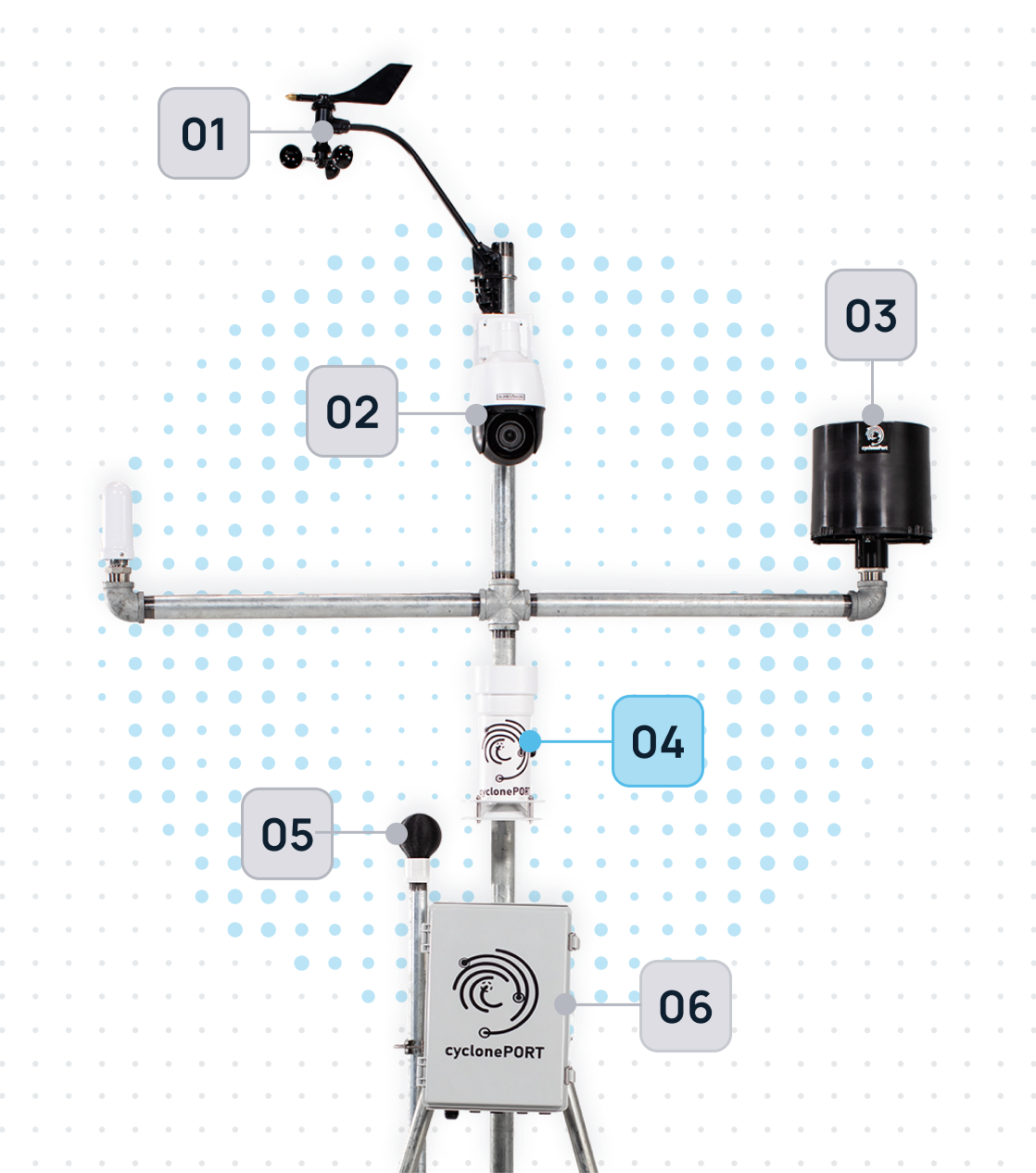
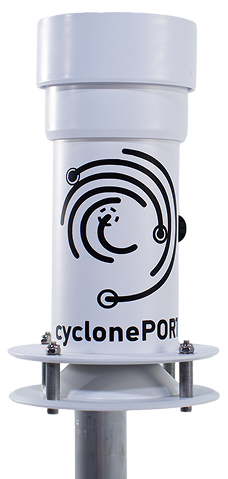
The Wet Bulb Globe is the “biometric” sensor of our weather stations. It doesn’t just measure ambient air; it accounts for the three-way punch of temperature, humidity, and solar radiation. By simulating how a human being absorbs heat while sweating in direct sunlight, it provides the Wet Bulb Globe Temperature (WBGT)—the most accurate metric for predicting heat exhaustion and sunstroke.
For companies managing outdoor crews, sports events, or high-load data centers, this sensor is the definitive “go/no-go” signal for safety.

The Intelligence Engine: CyclonePORT Hub
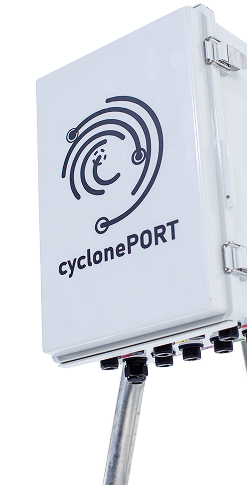
The CyclonePORT Hub is the central nervous system of our weather monitoring architecture. It serves as the high-speed bridge between raw environmental data and actionable cloud intelligence. While our sensors are busy “feeling” the storm, the Hub is busy translating those signals, encrypting the data, and ensuring it reaches our forecasting models in milliseconds—even when local power grids or traditional networks fail.
It is designed for “Edge Computing,” meaning it processes critical data locally to provide instant alerts before the information even hits the cloud.
Platform Features at a Glance for Athletic Programs
Specification | Detail |
Deployment | Permanent mount — athletic facilities, maintenance buildings, rooftops |
Power Options | Grid-connected or solar — flexible for any campus location |
User Access | Multi-user accounts — AD, coach, facilities, administration |
Alert System | Push alerts via RadarOmega app — configurable by threshold |
Data Logging | Full timestamped record — supports incident documentation |
Multi-Site | Single district dashboard for all campus locations |
Standards & Policy Alignment for Athletic Programs
cyclonePORT supports compliance with the major governing body weather policies applicable to school athletics:
- NFHS (National Federation of State High School Associations) Lightning Safety Guidelines
- NATA (National Athletic Trainers’ Association) Heat Acclimatization and Heat Illness Prevention
- NCAA Sports Medicine Handbook — Lightning Safety and Heat Illness
- State High School Athletic Association weather delay policies
- OSHA Heat Illness Prevention (for outdoor school employees and PE staff)
One Station, Entire Campus Coverage
A single cyclonePORT installation can serve your entire campus — athletic programs, facilities management, and administrative staff all see the same certified data through a shared dashboard and the RadarOmega app.
Districts can deploy multiple units across campuses and manage all locations from one account.
Common Use Cases
Athletic Field Lightning Monitoring
A cyclonePORT station mounted at an athletic complex gives ADs and coaches real-time lightning proximity data from the field they’re actually managing — not from a regional airport 15 miles away. Evacuation decisions are based on actual conditions, and every decision is backed by logged data.
Heat Acclimatization Compliance
Fall sports preseason is the highest-risk period for heat illness. NATA guidelines require monitoring of heat stress conditions during practice. CyclonePort’s temperature and humidity sensors provide the data inputs needed to calculate WBGT and apply the correct activity modification protocol.
Campus Facilities & Outdoor Events
From graduation ceremonies to outdoor concerts and fairs, campus events require weather monitoring. A permanently installed CyclonePort unit serves the entire campus — athletics, facilities, security, and event management all access the same real-time data.
When Seconds Decide Outcomes
A county emergency management agency detected rotation
Emergency crews coordinated faster with shared data
Frequently Asked Questions
How does cyclonePORT support lightning policy compliance for our athletics program?
cyclonePORT provides real-time lightning detection with proximity alerts you configure. Every strike detection is logged with timestamp and distance, giving athletic directors a documented record for each weather delay and 30-minute restart decision.
Can cyclonePORT calculate Wet Bulb Globe Temperature (WBGT) for heat policy compliance?
cyclonePORT captures the temperature and humidity inputs required for WBGT calculations. Heat index monitoring and alerts can be configured to support NATA heat acclimatization protocols during fall preseason and summer workouts.
We have multiple schools in our district. Can one system cover all campuses?
Yes. Districts can deploy individual cyclonePORT units at each campus and manage all locations from a single administrative dashboard. Each site provides its own localized data rather than sharing one regional reading.
What happens if a weather incident occurs and our policy is questioned?
cyclonePORT maintains continuous timestamped data logs of all sensor readings. This documentation can substantiate that weather decisions were made based on actual on-site conditions, which is a significant advantage in any incident review or liability situation.
Give Your Athletic Program the Data to Make
Compliant, Defensible Weather Calls
Contact our team for school and district pricing, installation options, and policy support resources.
cycloneport.com/contact | info@cycloneport.com | 844-737-9328