WBGT Monitor & Heat Stress Sensor
Wet Bulb Globe Temperature (WBGT) is a widely used heat-stress metric for professional monitoring of exertional heat risk. It is used in occupational, military, and athletic heat-safety programs, including protocols adopted by the U.S. military, the NCAA, and many state athletic associations, to help protect athletes and outdoor workers from heat illness.
Contents
01 What Is a Wet Bulb Thermometer? — The Instrument Behind the Index
02 What WBGT Measures and Why It Is the Standard
03 How WBGT Is Measured — The Three-Component System
04 WBGT vs. Heat Index — Why the Difference Matters
05 WBGT Activity Guidelines & Regulatory Thresholds
06 Operational Applications — Athletics, Workers, and Public Safety
07 Instrument Selection Guide — What Separates Professional WBGT Systems
08 Installation & Maintenance
09 cyclonePort WBGT Monitoring System — Platform, Integration & Deployment
10 Frequently Asked Questions


- 0.5°C WBGT
- Dry · Wet · Globe
- WBGT · Heat Index
- RadarOmega
01 What Is a Wet Bulb Thermometer? — The Instrument Behind the Index
A wet bulb thermometer is a temperature sensor wrapped in a water-saturated cotton wick and exposed to ambient air. As water evaporates from the wick, it carries heat away from the sensor — cooling the thermometer below the actual air temperature. The degree of cooling depends primarily on the humidity of the surrounding air: in dry conditions, rapid evaporation produces a large temperature depression; in humid conditions, slow evaporation produces little cooling, and the wet bulb temperature approaches the air temperature.
This evaporation-driven cooling is analogous to the way the human body cools itself through sweating, making wet-bulb temperature a useful indicator of environmental evaporative cooling potential. That is one reason the natural wet-bulb component receives the dominant 70% weighting in the outdoor WBGT formula.
The critical wet bulb danger threshold A very high wet-bulb temperature signals severe heat danger because it indicates that evaporative cooling from sweating is becoming ineffective. Humid heat is therefore much more dangerous than dry heat at the same air temperature. A wet-bulb temperature near 35°C (95°F) is often cited as a theoretical upper limit for human heat tolerance under idealized conditions, although dangerous heat stress can occur at lower values depending on activity level, clothing, wind, radiation, and individual vulnerability. |
Wet Bulb Temperature in Meteorology
Meteorologists use the difference between dry-bulb (air) temperature and wet-bulb temperature — the wet-bulb depression — together to estimate relative humidity, dew point, and other moisture variables. A large depression between the two readings indicates dry air with significant evaporative potential; a small depression indicates humid air near saturation. The sling psychrometer — a classic instrument that spins two thermometers (one dry, one wet-wick) through the air — remains a reference standard for humidity measurement in the field.
Wet Bulb Temperature in Agriculture and Industry
Wet-bulb temperature is operationally important in agriculture, snowmaking, and industrial cooling. In agriculture, sprinkler-based frost protection depends strongly on wet-bulb temperature because evaporating and freezing water control whether latent heat release is sufficient to protect plant tissue during freezing conditions.
Ski resorts use wet-bulb temperature to assess snowmaking potential, since effective snow production generally requires sufficiently low wet-bulb conditions, often around 28°F (-2°C) or lower, depending on equipment and ambient conditions.
In industrial applications, wet-bulb temperature defines the thermodynamic lower limit for evaporative cooling systems such as cooling towers and direct evaporative coolers: these systems cannot cool water or air below the wet-bulb temperature of the intake air, and real systems typically operate somewhat above that limit.
02 What WBGT Measures and Why It Is the Standard
Wet Bulb Globe Temperature (WBGT) is a widely recognized metric for assessing environmental heat stress on the human body. Unlike air temperature or heat index — which measure only one or two environmental variables — WBGT simultaneously accounts for all four factors that determine how effectively the human body can cool itself: air temperature, humidity, radiant heat from the sun, and wind speed.
The result is a single composite index, expressed in degrees Fahrenheit or Celsius, that tells athletes, athletic trainers, coaches, outdoor workers, and safety officers what the heat actually feels like to a body in motion and in direct sunlight — not what it feels like to a stationary person sitting in the shade, as the standard heat index does.
cyclonePort weather surveillance stations include a WBGT monitoring system as part of their sensor suite, delivering continuous real-time WBGT readings through the RadarOmega platform. WBGT is sometimes presented as a calculated approximation derived from temperature and humidity alone; cyclonePort’s system uses a dedicated black globe sensor to directly measure radiant heat — the physically measured component that makes WBGT genuinely different from heat index, and that no algorithmic approximation can fully replicate.
03 How WBGT Is Measured — The Three-Component System
A true WBGT measurement requires three distinct sensor inputs, each measuring a different aspect of the thermal environment. This is where WBGT monitoring systems separate into two categories: instruments that measure all three components directly, and systems that substitute calculated approximations for one or more components.
Component 1: Dry-Bulb Temperature (Tdb)
The dry-bulb temperature is standard ambient air temperature — the reading you would see on any outdoor thermometer. It is measured with a standard thermistor or RTD sensor housed inside a radiation shield that prevents direct solar heating of the sensor element. This is the baseline air temperature component of the WBGT formula.
Component 2: Natural Wet-Bulb Temperature (Tnwb)
The natural wet-bulb temperature is measured by a thermometer wrapped in a saturated cotton wick, exposed to ambient air without forced airflow. As water evaporates from the wick, evaporative cooling lowers the thermometer reading. The wet-bulb temperature tells you how effectively the atmosphere allows evaporative cooling — which directly mirrors how effectively the human body can cool itself through sweating. In dry air with low humidity, significant evaporation occurs, and the wet-bulb temperature drops below air temperature. In humid air near saturation, very little evaporation occurs, and the wet-bulb temperature approaches the dry-bulb temperature.
The wet-bulb temperature and the human body When the wet-bulb temperature equals the dry-bulb temperature (100% relative humidity), sweat evaporating from the skin has no cooling effect. The body’s primary heat dissipation mechanism fails. This is why a 90°F day at 90% humidity is far more dangerous to someone exercising outdoors than a 100°F day at 20% humidity — and why no metric that ignores humidity can adequately characterize heat stress risk. |
Component 3: Globe Temperature (Tg) — The Black Globe Sensor
The globe temperature is measured inside a hollow copper sphere approximately 6 inches (150 mm) in diameter, painted matte black. The black surface absorbs a large fraction of incoming solar and thermal radiation — direct sunlight, reflected light from surfaces, and thermal radiation from surrounding objects — and converts it to heat. A temperature sensor inside the globe measures the globe’s equilibrium temperature under combined radiative and convective conditions.
The globe temperature is what makes WBGT fundamentally different from heat index. It is the WBGT component that captures radiant heat load experienced in sun-exposed environments — accounting for solar angle, cloud cover, and radiant heat from artificial sources like track surfaces, turf fields, and industrial equipment. You cannot calculate an accurate globe temperature from humidity and air temperature alone. You must measure it.
The WBGT Formula
| WBGT Calculation — Outdoor (Direct Sun) |
| WBGT (outdoor) = 0.7 × Tnwb + 0.2 × Tg + 0.1 × Tdb |
| Where: Tnwb = Natural wet-bulb temperature | Tg = Globe temperature | Tdb = Dry-bulb (air) temperature |
| The wet-bulb component carries 70% of the weighting — reflecting the dominant role of humidity and evaporative cooling in heat stress. |
| The globe component carries 20% — capturing radiant heat from sunlight and hot surfaces. |
| The dry-bulb component carries 10% — reflecting its relatively minor independent contribution when the other two components are measured. |
| WBGT Calculation — Indoor (No Direct Sun) |
| WBGT (indoor) = 0.7 × Tnwb + 0.3 × Tg |
| The dry-bulb term is dropped for indoor calculations where solar radiation is not a factor. |
04 WBGT vs. Heat Index — Why the Difference Matters
Heat index and WBGT are often conflated, but they describe different aspects of heat exposure and are not interchangeable for operational safety decisions. Heat index reflects the combined effect of air temperature and relative humidity under shaded, light-wind conditions. WBGT is a broader environmental heat-stress index that also accounts for radiant heat and the influence of airflow through its wet-bulb and globe components. For this reason, WBGT is widely used in occupational, military, and athletic heat-safety programs, especially where people are active outdoors in direct sun.
| Attribute | Comparison |
|---|---|
| What it measures | Heat Index: Air temperature + relative humidity only | WBGT: Air temperature + humidity + solar radiation + wind |
| Measured in | Heat Index: The shade | WBGT: Direct sun — where athletes and outdoor workers actually operate |
| Solar radiation | Heat Index: Not included | WBGT: Directly measured by the black globe sensor |
| Wind | Heat Index: Not included | WBGT: Incorporated through wet-bulb and globe temperature dynamics |
| Physical activity | Heat Index: Calculated for a person at rest | WBGT: Applicable to active individuals; work-rest tables are calibrated for physical exertion |
| Regulatory acceptance | Heat Index: Public guidance / screening in many settings | WBGT: Primary metric in many occupational, military, and athletic heat programs |
05 WBGT Activity Guidelines & Regulatory Thresholds
WBGT thresholds translate a single environmental measurement into specific operational decisions about whether to proceed, modify, or suspend outdoor activity. Exact thresholds vary by acclimatization status, workload, clothing/equipment, and governing-body policy, which is why athletes and workers in different climates may be managed under different heat protocols. Always consult the current policy of the relevant governing body or employer.
Common WBGT Flag (Military-Derived Operational System)
A widely recognized operational heat-alert system uses color-coded WBGT bands to communicate increasing heat risk. These bands are commonly associated with military heat programs and are also referenced in some athletic and occupational settings, but the specific actions tied to each category vary by organization.
| WBGT Range | Risk Level & Action |
|---|---|
| Below 25.6°C (78°F) | White flag — Low risk |
| 25.6–29.4°C (78–85°F) | Green flag — Moderate risk |
| 29.5–31.0°C (85–88°F) | Yellow flag — High risk |
| 31.1–32.2°C (88–90°F) | Red flag — Very high risk |
| Above 32.2°C (90°F) | Black flag — Extreme risk |
The specific actions associated with each band (work/rest ratios, water intake requirements, equipment restrictions, activity restrictions) vary by the governing organization.
Example: GHSA Outdoor Athletics
U.S. military heat programs use WBGT-based categories to guide water intake, work/rest cycles, and activity restrictions. Exact prescriptions depend on workload, acclimatization status, and clothing/uniform configuration.
OSHA / NIOSH Occupational Heat Exposure
In occupational hygiene, WBGT is a core metric in NIOSH and ACGIH heat-stress frameworks, where allowable exposure depends on metabolic workload, acclimatization status, and clothing adjustments. Heat index may be used as a simpler screening tool, but WBGT is generally the more complete environmental heat-stress measurement for sun-exposed and physically demanding work.
ISO 7243 is the foundational international standard for WBGT measurement and exposure assessment. Specific WBGT limits expressed in ISO 7243 and in NIOSH RELs depend on workload and acclimatization; consult the current standard for the values applicable to a given work environment.
06 Operational Applications — Athletics, Workers, and Public Safety
High School and Collegiate Athletics
Environmental heat illness risk can be dramatically reduced when appropriate monitoring, activity modification, and emergency response protocols are in place. During the 2021–22 school year, NFHS expanded support for WBGT adoption through a grant program that helped place WBGT devices in schools nationwide. In Georgia, GHSA policy requires WBGT monitoring for outdoor practices and competitions prior to October 1, including school-affiliated summer activities such as 7-on-7, strength and conditioning, and camps, in accordance with current association rules.
cyclonePort weather surveillance stations installed at athletic facilities provide continuous WBGT readings to coaches, athletic trainers, and administrators through RadarOmega, reducing the burden of periodic manual measurements and creating timestamped records that can support heat-policy compliance documentation.
Real-world WBGT gap — why it matters on the field Consider an August football practice at 2 PM: the air temperature reads 90°F and the heat index shows 95°F. But WBGT measured on the sun-exposed artificial turf field registers 95–100°F — crossing the GHSA threshold that requires protective equipment restrictions or practice cancellation. That gap between what some data shows and what the body actually experiences on the field surface is precisely what WBGT is designed to capture, and what heat index consistently misses. The difference determines whether athletes are practicing safely or at serious risk of exertional heat stroke. |
Beyond threshold compliance, continuous WBGT data enables proactive scheduling decisions that reduce heat exposure without cancelling activity entirely. Practice times shifted to early morning typically see lower WBGT readings than peak afternoon conditions — a difference that can move a session from the red flag zone to the green flag zone. cyclonePort’s historical WBGT data archive allows athletic programs to analyze seasonal patterns, optimize practice scheduling, and document the environmental conditions behind every scheduling decision.
Outdoor Workers — OSHA and Occupational Heat Safety
Outdoor industries such as construction, agriculture, landscaping, roofing, utilities, and other field operations face elevated risk of heat illness during hot weather. In these settings, WBGT is widely used as a more complete heat-stress metric than air temperature or heat index alone because it accounts for humidity, radiant heat, ambient air temperature, and the effects of airflow on evaporative cooling. That makes it especially valuable for evaluating real-world heat exposure in direct sun and during physical work.
By deploying continuous on-site WBGT monitoring, organizations can make heat-safety decisions based on actual environmental conditions rather than generalized forecasts or handheld spot checks alone. This supports more consistent work/rest planning, hydration protocols, activity modification, and escalation procedures during high-heat periods. cyclonePort weather surveillance stations provide continuous WBGT measurements and timestamped records through RadarOmega, giving safety managers, supervisors, and compliance personnel documented environmental data that can support heat-safety programs, operational decision-making, and incident review.
Military and First Responder Training
U.S. military heat programs have used WBGT-based heat categories for decades, as heat-stress protocols evolved in response to serious training casualties. On many installations, color-coded flag systems corresponding to WBGT heat categories are used to communicate current heat conditions and guide training intensity, work/rest cycles, hydration requirements, and other heat precautions for outdoor personnel.
First responder agencies — fire departments, law enforcement, search and rescue — face similar heat stress risks during training exercises, wildfire operations, and extended outdoor deployments. cyclonePort WBGT monitoring at training facilities and forward operating locations provides the real-time data needed to implement heat safety protocols without compromising operational readiness.
Large Events and Public Gatherings
Stadium operators, race directors, festival organizers, and municipality emergency managers use WBGT to make real-time decisions about outdoor events: whether to modify schedules, activate additional cooling resources, or suspend outdoor activities entirely. Unlike heat index — which does not account for direct solar radiation and is calculated for shade conditions — WBGT reflects what spectators and participants standing on sun-exposed surfaces actually experience.
cyclonePort delivers WBGT alongside wind speed, humidity, temperature, and camera feeds through the RadarOmega platform — giving event operations teams the complete picture, not just a heat number divorced from context.
Emergency Management
During heat waves — increasingly frequent and severe events — public health and emergency management agencies use environmental heat data to help make decisions, such as activating cooling centers and coordinating wellness checks for vulnerable populations. WBGT can provide a more complete picture of heat stress conditions for these decisions, particularly when populations at risk include older adults, people engaged in outdoor labor, or those without air conditioning who are exposed to both ambient heat and solar radiation.
07 Instrument Selection Guide — What Separates Professional WBGT Systems
WBGT instruments range from low-cost handheld devices that estimate one or more components to professional systems that directly measure the full environmental heat-stress profile. The differences matter operationally, from measurement accuracy and response time to documentation quality and policy compliance.
| Specification | What to Require |
|---|---|
| Black Globe Sensor Required | A true WBGT reading requires a physical black globe thermometer. Systems that calculate or estimate globe temperature from humidity and air temperature are computing an approximation of heat index, not WBGT. If your governing body requires direct WBGT measurement, verify that the system includes an actual black globe. |
| Globe Diameter | ISO 7243 specifies 150 mm (approximately 6 inches). Smaller globes — including the 1-inch or smaller globes in many handheld devices — underestimate radiant heat by producing readings that diverge from true WBGT at peak solar conditions. For safety-critical applications, use a full-size globe. |
| Natural vs. Psychrometric Wet Bulb | The WBGT formula specifies natural wet-bulb temperature — measured by a thermometer with a wet wick in still ambient air. Many lower-cost instruments compute ‘psychrometric wet bulb’ from relative humidity and air temperature using a formula. Research has shown that psychrometric wet-bulb substitution systematically underestimates WBGT, producing conservative (dangerously low) readings. Instruments that explicitly measure natural wet-bulb temperature produce more accurate and safer results. |
| Equilibration Time | Handheld instruments require 15–30 minutes of equilibration time before producing reliable readings after being moved from one environment to another. A permanently installed station is in continuous equilibration with ambient conditions — no wait time, always ready. |
| Continuous vs. Spot Reading | Handheld devices require a person to take a reading, note it, and return. Fixed station systems log WBGT continuously and archive every reading with a timestamp. For policy documentation under frameworks like GHSA and OSHA, continuous logging is generally superior to manual observation records. |
| Network Integration | A WBGT reading in isolation has limited value. WBGT alongside wind speed, humidity, temperature, rain gauge, and camera feeds — all from the same station in the same platform — is what turns environmental monitoring into operational safety infrastructure. |
| ISO 7243 Compliance | ISO 7243 is the international standard for WBGT measurement. Instruments designed and specified to meet ISO 7243 requirements for globe diameter, wet-bulb sensor geometry, and dry-bulb shielding produce the most defensible and accurate WBGT measurements. Verify ISO compliance for any instrument used in regulated or legally consequential applications. |
| Calibration Interval | Verify required calibration intervals under the relevant governing policy and confirm that the manufacturer provides factory calibration documentation and recalibration support. |
08 Installation & Maintenance
WBGT is one of the most siting-sensitive measurements in meteorological instrumentation. Because the black globe must be exposed to direct solar radiation to accurately measure radiant heat — and the wet-bulb sensor must be in natural ambient airflow — placement and exposure choices have outsized effects on reading accuracy.
Siting Guidelines
- Open sky exposure: The black globe must have unobstructed exposure to the sky above and to the horizon in all directions. Shade from trees, structures, or overhangs blocks solar radiation from reaching the globe, causing the system to systematically underestimate radiant heat and produce artificially low WBGT readings.
- Representative location: Place the system where athletes or workers actually operate. A WBGT reading at a shaded equipment shed tells you nothing about conditions on the sun-exposed practice field 100 yards away. If the activity is on an artificial turf field in direct sun, the instrument must be on or immediately adjacent to that surface.
- Pre-equilibration: Where governing-body policy specifies equilibration time before activity, the instrument must be set up and allowed to equilibrate at the activity venue per the policy requirement. A permanently installed cyclonePort station eliminates this requirement entirely — it is always in equilibration.
- Away from heat sources: Artificial heat sources — HVAC exhausts, generators, cooking equipment, industrial processes — must not be within the sensing radius of the WBGT system. These inflate globe and dry-bulb readings independently of ambient conditions.
- Standard height: Mount the system at approximately 1.2–1.5 meters (4–5 feet) above the ground surface, consistent with the breathing zone of a standing person.
Black Globe Sensor Maintenance
- Surface condition: The matte black finish of the globe must be maintained. Oxidation, bird droppings, pollen, or any coating that changes the surface from matte black to reflective or different-colored alters the radiation absorption characteristics and introduces calibration error. Clean the globe surface gently with a soft cloth and mild soap periodically.
- Structural integrity: Inspect the globe for cracks, dents, or physical damage that could allow moisture intrusion or alter the internal thermal environment. A cracked globe must be replaced before the sensor is used for safety decisions.
- Internal sensor check: Verify the globe temperature sensor is reading plausibly relative to ambient temperature — on a clear, sunny day, globe temperature should significantly exceed air temperature. A globe reading close to air temperature in full sun indicates possible sensor failure or surface reflectivity change.
Wet-Bulb Sensor Maintenance
- Wick replacement: The cotton wick on the natural wet-bulb sensor must be kept moist and clean. Replace the wick periodically — frequency depends on water quality and ambient conditions. A contaminated or dried wick produces inaccurate wet-bulb readings.
- Water reservoir: The wet-bulb sensor requires a water reservoir that keeps the wick saturated. Check and refill the reservoir regularly, particularly during prolonged hot, dry periods. Use distilled water where possible to minimize mineral deposits on the wick.
Calibration
cyclonePort WBGT systems ship with factory calibration documentation. Recalibration intervals should follow the manufacturer’s specification and the requirements of the governing policy under which the instrument is used. The individual component sensors (temperature, humidity) can be verified against calibrated reference instruments in controlled conditions.
09 cyclonePort WBGT Monitoring System
cyclonePort weather surveillance stations include a WBGT monitoring system with a dedicated 6-inch black globe sensor, delivering continuous real-time WBGT readings through the RadarOmega platform alongside all other station sensor streams.
Technical Specifications
| Parameter | Specification |
|---|---|
| WBGT Measurement | Three-component system: dry-bulb temperature, natural wet-bulb temperature, and globe temperature directly measured |
| Black Globe Sensor | 6-inch (150 mm) hollow copper sphere, matte black finish — ISO 7243 compliant diameter |
| Globe Temperature Range | –10°C to +80°C; accuracy ±0.5°C (ISO 7243 range: 20–50°C ±0.5°C) |
| Dry-Bulb Sensor | Radiation-shielded temperature sensor; range –40°C to +60°C; accuracy ±0.3°C |
| Wet-Bulb Sensor | Natural wet-bulb: cotton wick over thermistor in ambient air; range 5°C to 40°C; accuracy ±0.5°C |
| WBGT Output Accuracy | ±0.5°C composite WBGT under typical outdoor conditions |
| WBGT Formula Applied | Outdoor (sun): 0.7 Tnwb + 0.2 Tg + 0.1 Tdb | Indoor (shade): 0.7 Tnwb + 0.3 Tg |
| Additional Outputs | Heat index, humidity, dew point, air temperature, barometric pressure — all from the same station |
| Update Interval | Continuous real-time; configurable summary intervals (1–5 min) |
| Data Transmission | Cellular, Wi-Fi, or Ethernet depending on station model |
| Data Access | Web portal, mobile app, REST API via RadarOmega |
| Compliance Logging | Timestamped WBGT records with CSV/JSON export |
| Calibration | Factory-calibrated; recalibration interval per manufacturer specification and governing policy |
| Environmental Rating | IP65+; full outdoor exposure; UV-resistant housing |
| Station Lifespan | 10+ years with recommended maintenance schedule |
| Power | Integrated into cyclonePort station power system; solar-compatible |
Specifications may vary by model. Contact cyclonePort for current engineering documentation.
What the System Delivers
- Continuous real-time WBGT updated throughout every practice, game, and work shift
- Timestamped log — every WBGT reading archived with timestamp
- Full weather picture — WBGT alongside wind speed, humidity, temperature, dew point, rain gauge, and barometric pressure from the same station
- PTZ camera integration — correlate live video with WBGT readings for situational awareness during events
- Multi-station comparison — monitor WBGT across multiple venues or field locations simultaneously
- Remote access — coaches, athletic trainers, and administrators access live WBGT from any device via RadarOmega
- Historical archive — full WBGT history accessible for trend analysis, policy review, and after-action documentation
Who Deploys cyclonePort WBGT Monitoring
| Sector | What cyclonePort Enables |
|---|---|
| School Districts & Athletic Programs | Continuous WBGT for all outdoor practices and games. Timestamped records that can support heat-policy documentation. |
| Colleges & Universities | Multi-venue monitoring for athletic programs, ROTC, marching band, and outdoor campus events. Integration with athletic training workflows. |
| Military & First Responders | Heat category monitoring for training operations. Continuous WBGT for garrison and field training environments. Work/rest ratio decision support. |
| Construction & Industry | Continuous WBGT data for outdoor worksites to support work/rest protocol implementation and heat-safety program documentation. |
| Large Events & Venues | Stadium, festival, and public event heat safety. Real-time WBGT to inform spectator safety decisions and event modification. Coordination with public health and emergency management. |
| Emergency Management | Heat wave situational awareness. Population heat stress monitoring. Integration with public advisory systems and cooling center activation protocols. |
Deploy WBGT Monitoring at Your Facility cyclonePort WBGT systems scale from a single athletic field to multi-venue campus networks. Contact our team to configure the right deployment — hardware, placement guidance, and compliance documentation setup. info@cycloneport.com · 844-737-9328 · cycloneport.com/contact |
10 Frequently Asked Questions
What is WBGT and what does it measure?
WBGT is a composite environmental heat-stress index that combines natural wet-bulb temperature, globe temperature, and, in outdoor sun conditions, dry-bulb air temperature to assess how stressful heat conditions are for the human body during activity.
What is the difference between WBGT and heat index?
Heat index uses only air temperature and relative humidity and is intended for shaded, light-wind conditions. WBGT also accounts for radiant heat and airflow effects, making it more appropriate for outdoor athletics, military training, and strenuous work in direct sun.
What WBGT reading requires canceling outdoor activity?
There is no universal cancellation threshold. The correct value depends on the governing body, workload, acclimatization status, and clothing/equipment. Some athletic associations, such as GHSA, publish specific no-activity thresholds. U.S. military programs use heat categories tied to WBGT bands that constrain activity for unacclimatized personnel above certain values. OSHA/NIOSH exposure limits depend on workload and acclimatization. Consult the current rules of the governing body or employer applicable to your activity.
Does a WBGT monitor need a physical black globe sensor?
For direct WBGT measurement, yes. A physical black globe is required to measure globe temperature rather than estimate it.
Why does the size of the black globe matter?
The WBGT standard is based on a 150 mm black globe. Smaller globes have different thermal response characteristics and may not match the standard measurement under strong sun and varying wind.
Can cyclonePort WBGT data be used for heat-safety documentation?
cyclonePort systems can provide timestamped WBGT records that support heat-safety documentation, trend analysis, and incident review. Acceptance for formal compliance depends on the governing policy and instrument requirements.
What is exertional heat stroke and how does WBGT monitoring prevent it?
Exertional heat stroke is a life-threatening failure of heat regulation during physical activity. WBGT monitoring helps reduce risk by guiding activity modification before environmental heat stress reaches dangerous levels.
Related Instruments & Guides
WBGT integrates data from multiple cyclonePort sensors. Explore the related instrument pages:
↗ Humidity Sensor & Hygrometer — Relative humidity and dew point monitoring [link]
↗ Temperature Sensor — Air temperature measurement and heat index calculation [link]
↗ Wind Meter & Anemometer — Wind speed and direction monitoring for heat stress and safety [link]
↗ Rain Gauge — Precipitation monitoring alongside heat stress for complete event weather [link]
↗ Barometric Pressure Sensor — Pressure monitoring for storm tracking and complete weather picture [link]






Built for Severe Weather
The Pulse of the Sky
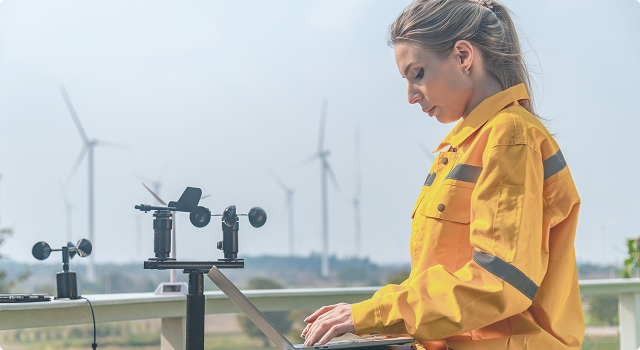
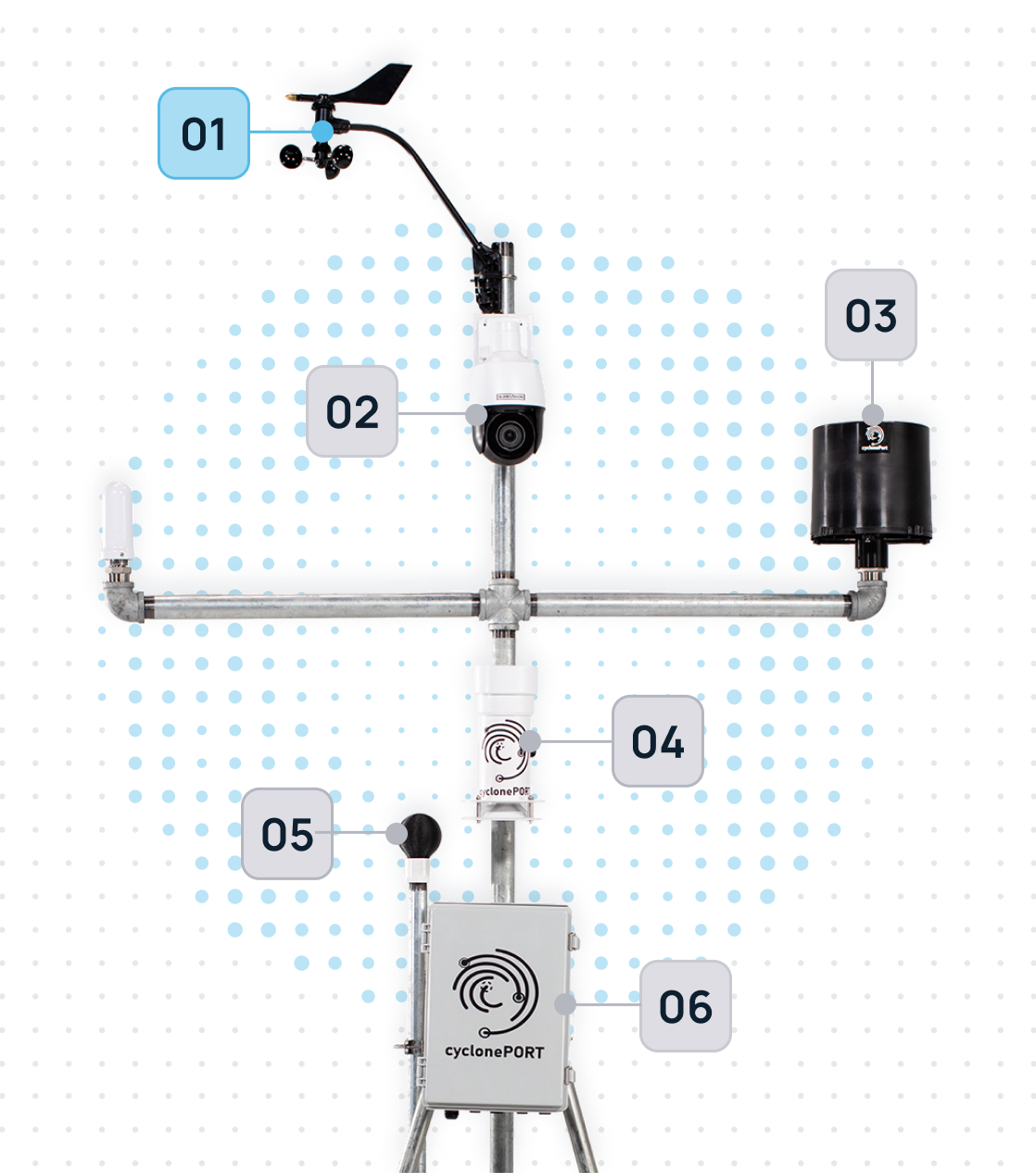
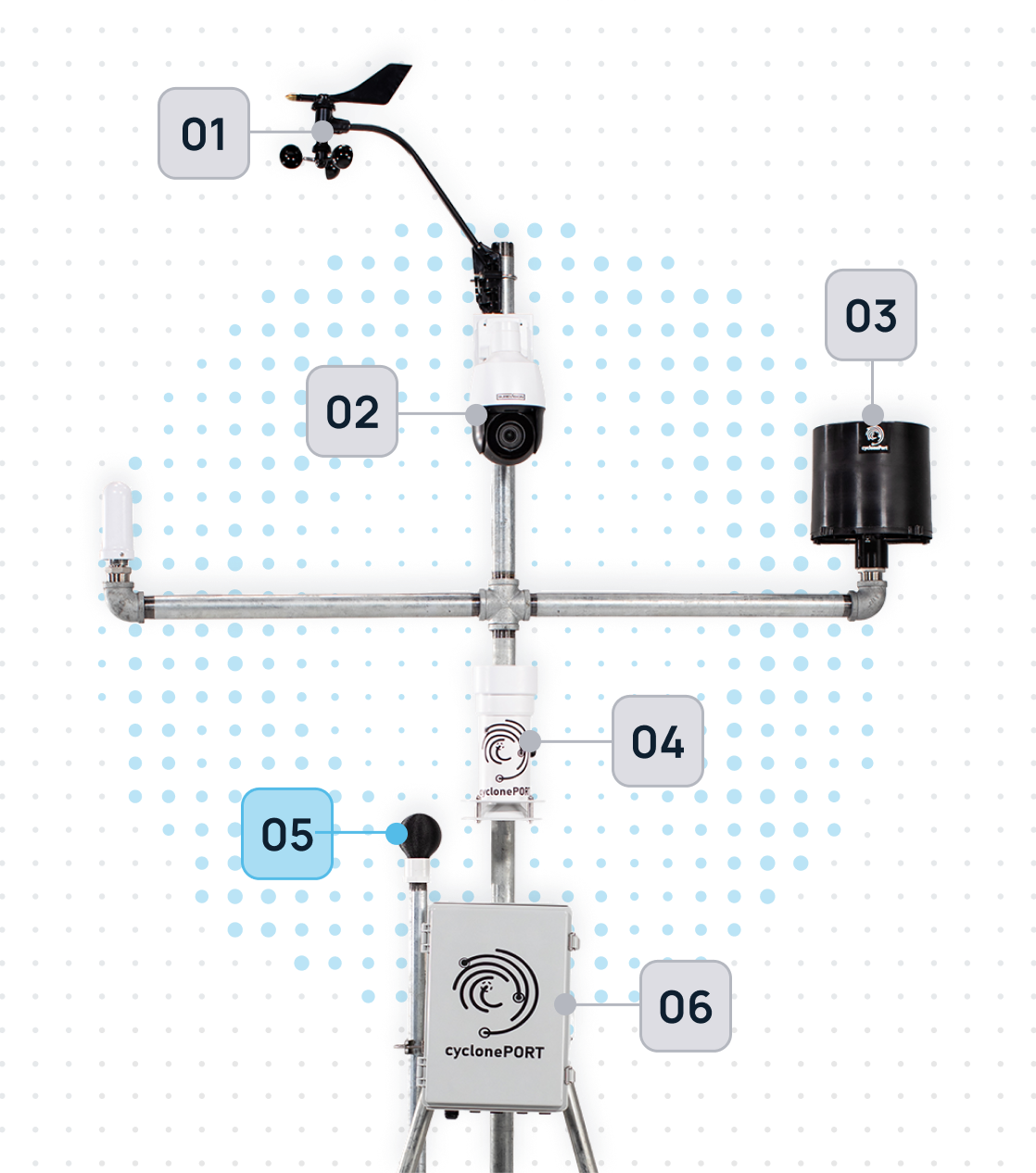
The anemometer is the “nervous system” of our weather stations. Moving beyond old-fashioned mechanical cups, our hardware utilizes ultrasonic sensor arrays to measure the velocity and direction of the wind. By calculating the time it takes for sound pulses to travel between sensors, it provides a lag-free, high-definition map of air movement.
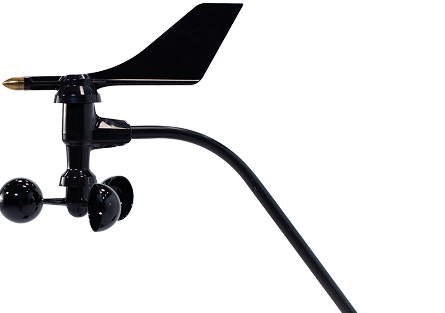
The PTZ Observation Unit
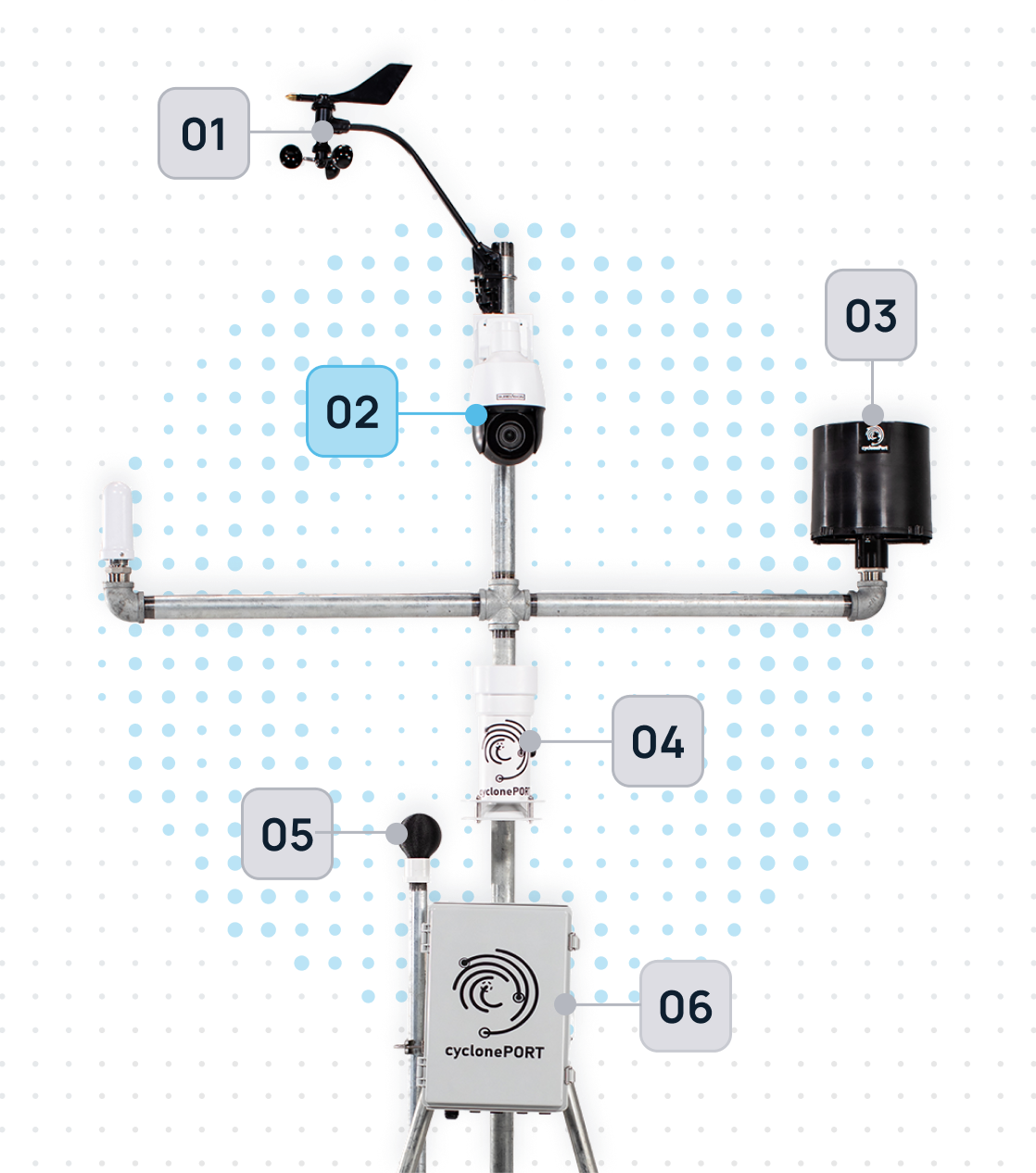
Our PTZ units are ruggedized optical sensors designed to withstand the very conditions they are monitoring. These aren’t just for recording video; they serve as a critical layer of visual ground-truthing. When our sensors detect a change in wind speed or pressure, the PTZ camera can automatically swivel to the point of interest—allowing us to see the formation of wall clouds, debris, or precipitation in real-time.
The lens moves vertically, allowing for a look at both high-altitude cloud formations and ground-level impacts
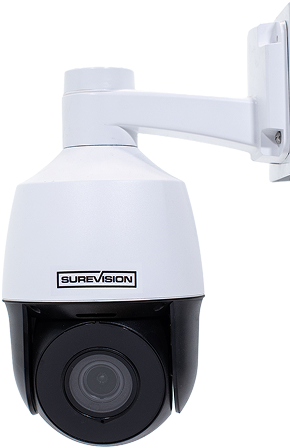
Liquid Precision: The Smart Rain Gauge
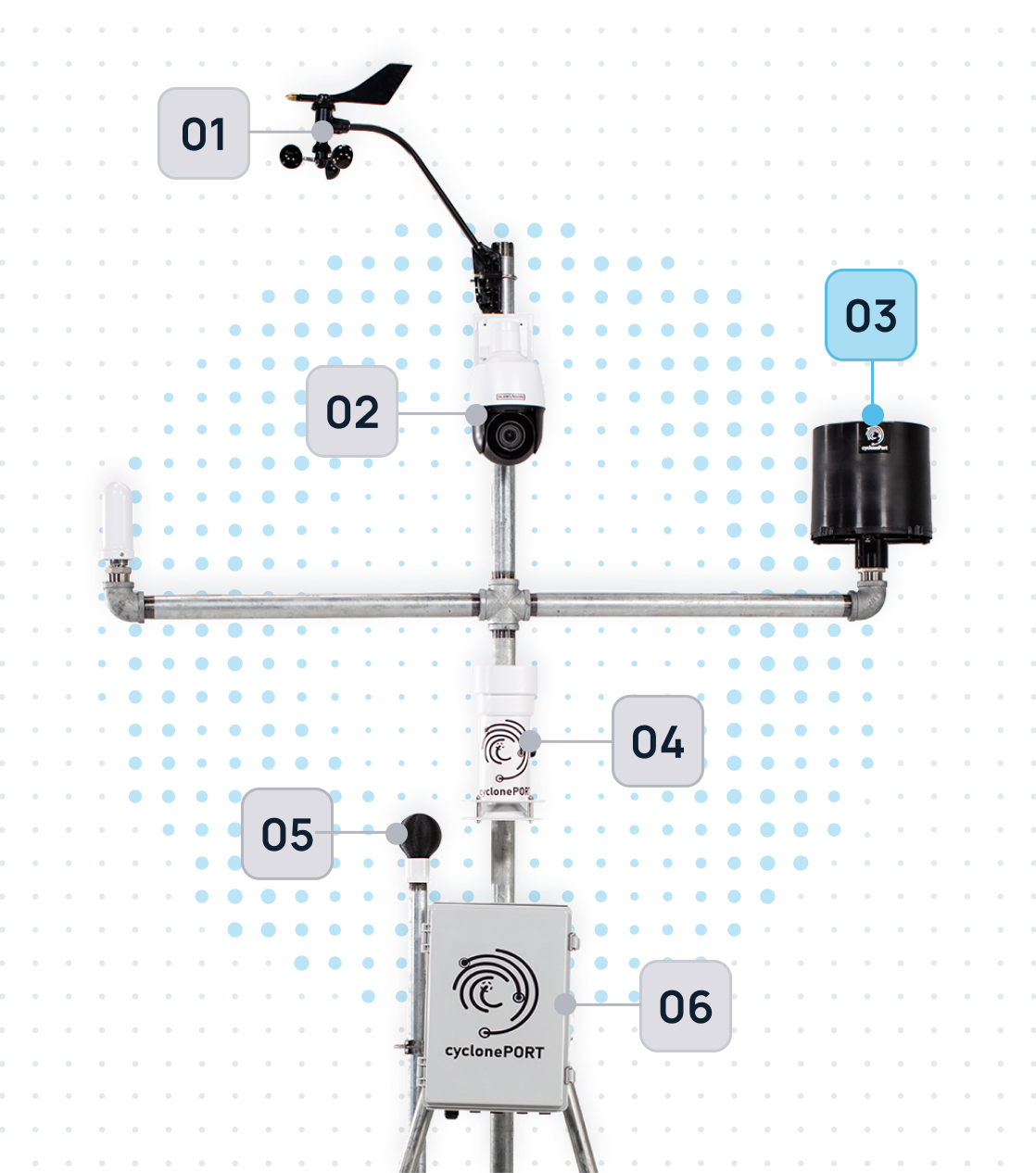
The rain gauge is the primary component for measuring precipitation intensity and accumulation. Our systems typically utilize “Tipping Bucket” or “Optical” technology to provide high-resolution data. As droplets enter the collector, the sensor logs the volume in real-time, allowing our AI to calculate rainfall rates per minute.
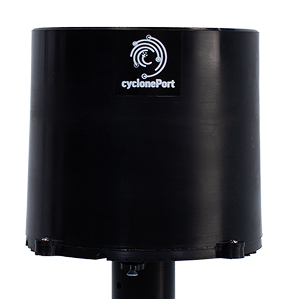
Resilience by Design: The Primary Sensor Housing
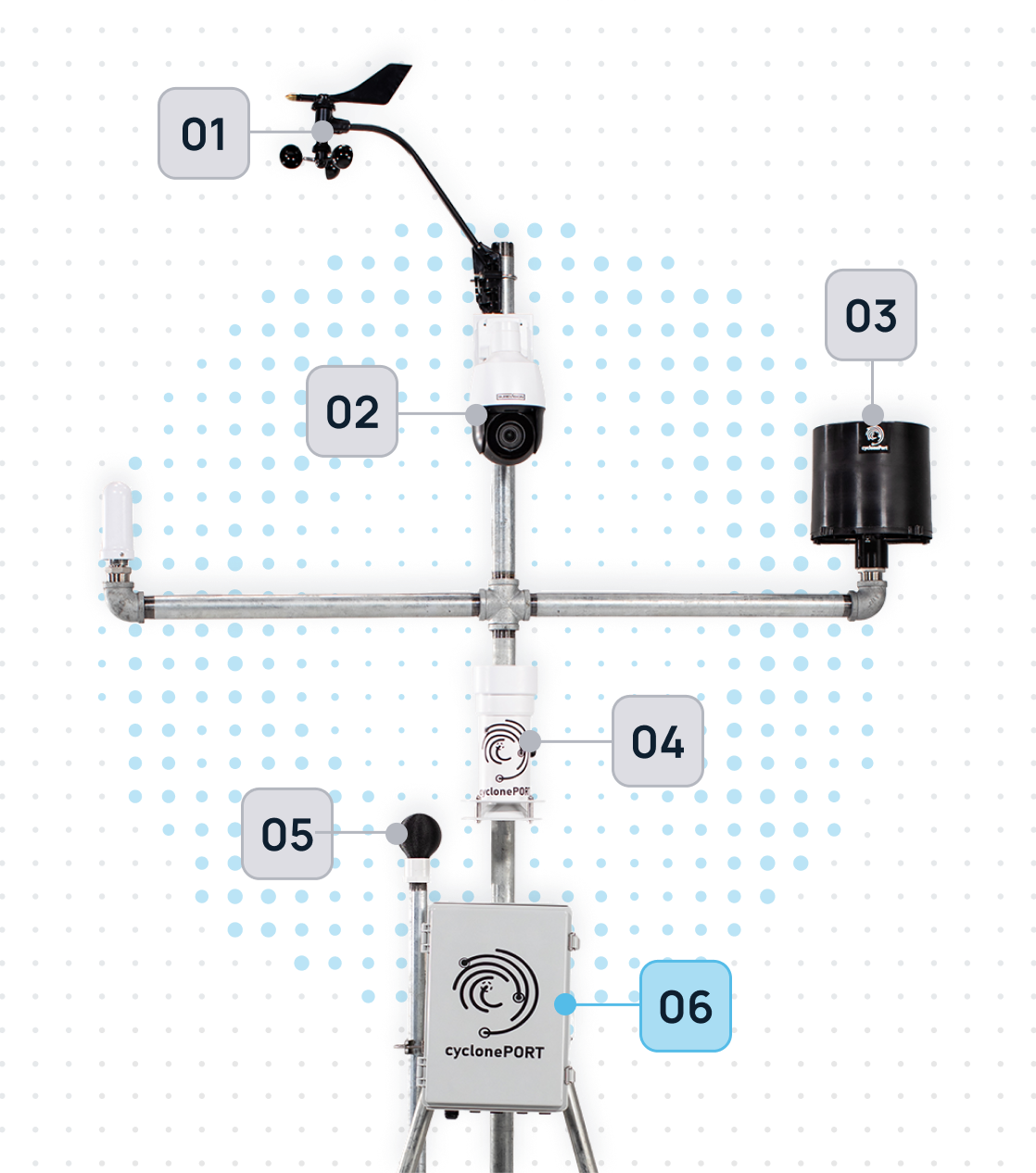
The Primary Sensor Housing is the ruggedized enclosure that integrates and protects the suite of meteorological instruments. It isn’t just a box; it is a precision-engineered environment. Designed with aerodynamic stability and thermal regulation, it ensures that internal components—like barometers, data loggers, and transmission hardware—stay dry, cool, and connected even in hurricane-force winds or sub-zero blizzards.
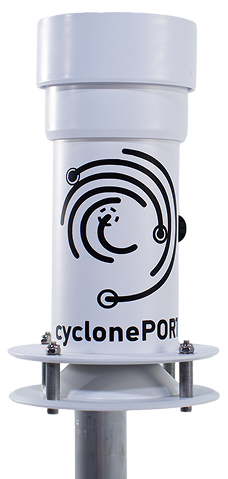
Human-Centric Heat Intelligence
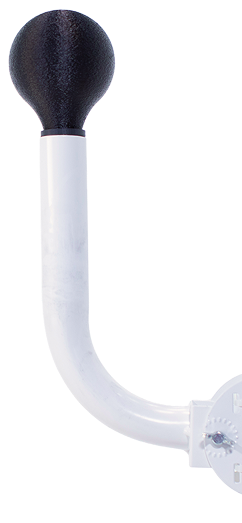
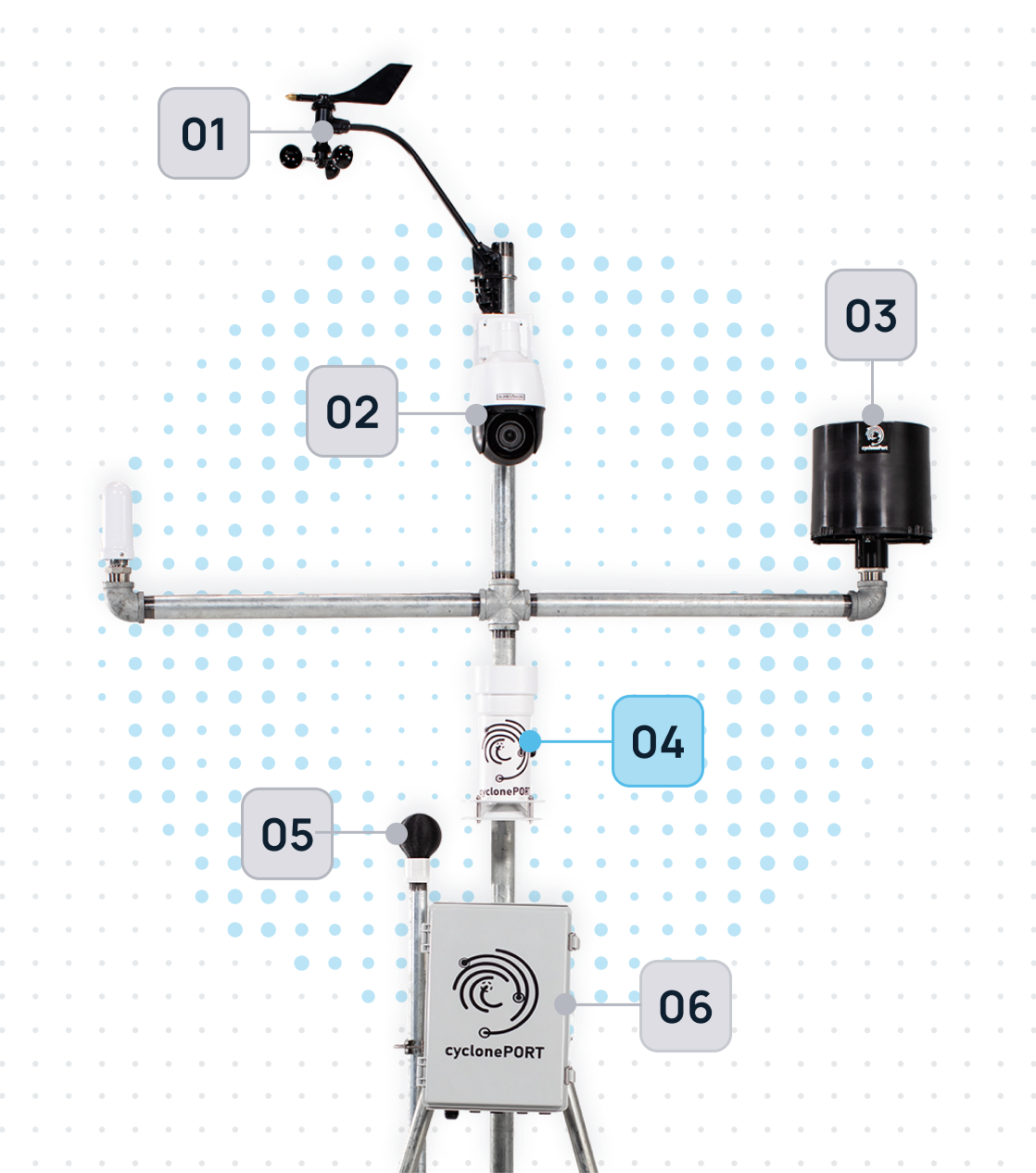
The Wet Bulb Globe is the “biometric” sensor of our weather stations. It doesn’t just measure ambient air; it accounts for the three-way punch of temperature, humidity, and solar radiation. By simulating how a human being absorbs heat while sweating in direct sunlight, it provides the Wet Bulb Globe Temperature (WBGT)—the most accurate metric for predicting heat exhaustion and sunstroke.
For companies managing outdoor crews, sports events, or high-load data centers, this sensor is the definitive “go/no-go” signal for safety.
The Intelligence Engine: CyclonePORT Hub
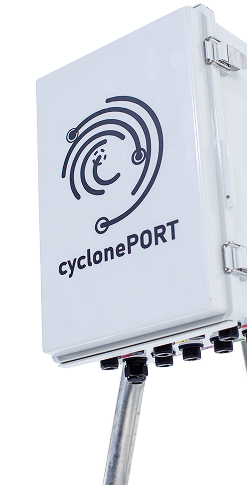
The CyclonePORT Hub is the central nervous system of our weather monitoring architecture. It serves as the high-speed bridge between raw environmental data and actionable cloud intelligence. While our sensors are busy “feeling” the storm, the Hub is busy translating those signals, encrypting the data, and ensuring it reaches our forecasting models in milliseconds—even when local power grids or traditional networks fail.
It is designed for “Edge Computing,” meaning it processes critical data locally to provide instant alerts before the information even hits the cloud.