
Farm Weather Station & Agricultural Weather Monitoring
Protect crops, livestock, and labor with certified on-site weather data built for production agriculture
- Consult
We map your organization’s needs.
- Deploy
- Monitor
The Challenge
Why Farms & Agricultural Operations Choose cyclonePORT
From row crop producers to specialty growers, livestock operations to commercial nurseries, cyclonePORT is the farm weather station built for production-scale agricultural decision-making:
- Precision spray timing: Wind speed, wind direction, temperature, humidity, and precipitation data combine to give spray applicators every variable needed to optimize application windows and stay within label requirements.
- Frost and freeze alerts: Configurable temperature threshold alerts notify growers when conditions approach crop-damaging temperatures — early enough to activate frost protection systems.
- Heat stress monitoring: Track temperature and humidity to protect livestock, poultry, and outdoor agricultural workers under OSHA heat illness prevention requirements.
- Lightning safety for field crews: Automated lightning proximity alerts protect operators, field laborers, and livestock handling crews working in open fields.
- Irrigation management: Actual on-site precipitation data, evapotranspiration inputs, and humidity readings support data-driven irrigation scheduling that reduces water usage and improves yield.
- Timestamped data logging: Continuous records support crop insurance claims, USDA reporting, food safety documentation, and spray application recordkeeping.
What You're Monitoring
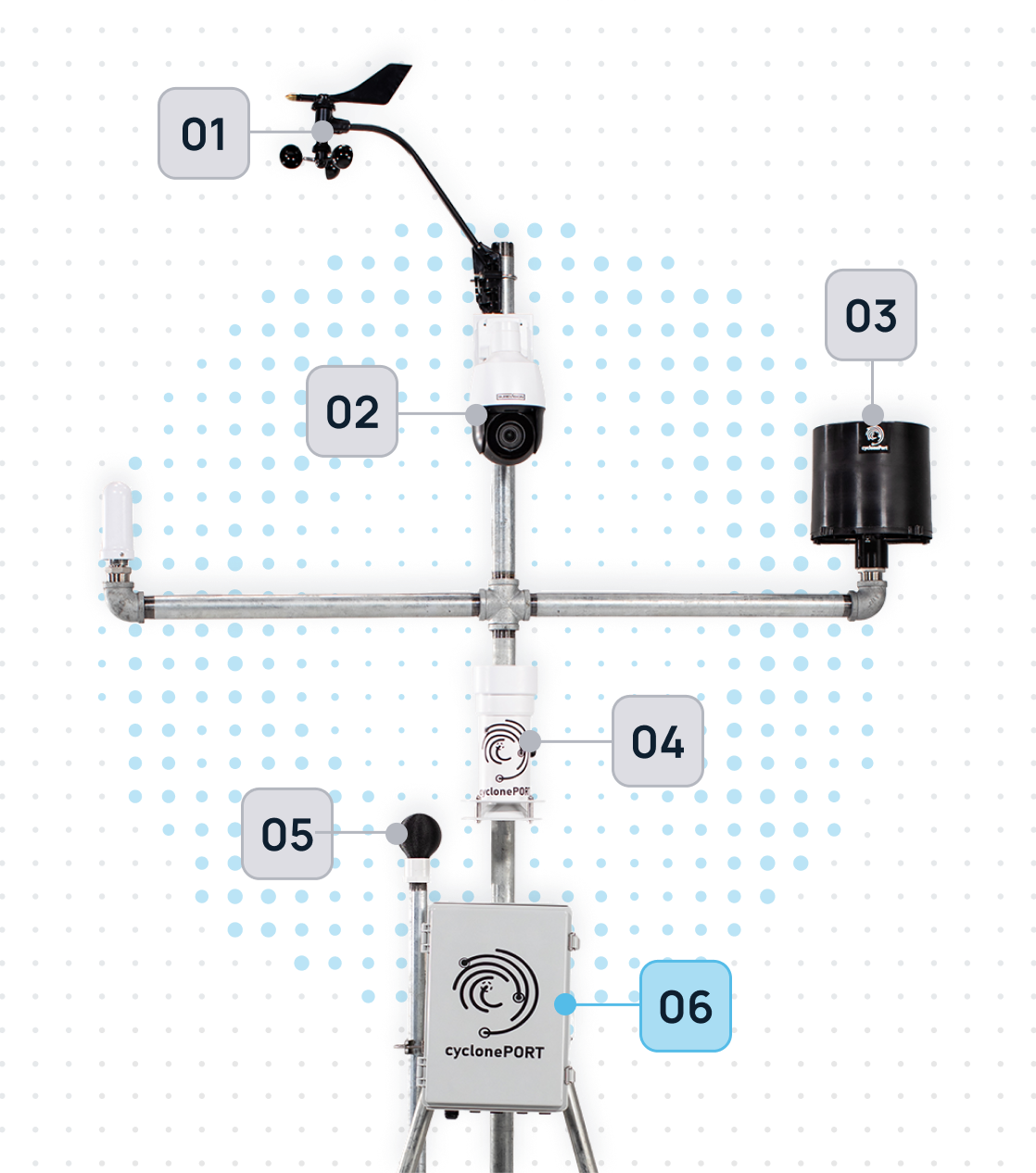
cyclonePORT’s integrated agricultural sensor station captures every variable relevant to farm operations and crop management:
| Specification | Detail |
| Temperature | Ambient + wet bulb — frost alerts, heat stress monitoring, ET calculations |
| Relative Humidity | Continuous RH% — spray window analysis, disease pressure modeling, livestock comfort |
| Wind Speed | mph/kph with gust detection — spray label compliance, lightning tracking |
| Wind Direction | 360° bearing — drift risk for spray applications, field crew safety |
| Rain Gauge | Tipping bucket precision — irrigation trigger, spray re-entry timing, crop insurance documentation |
| Barometric Pressure | Storm system tracking — advance warning for field operations planning |
| Lightning Detection | Real-time proximity alerts — field crew and livestock safety |
| Data Logging | Continuous timestamped archive — USDA, food safety, crop insurance, and OSHA documentation |
Spray Decisions Made on Bad Data Cost Real Money
Pesticide and fertilizer labels include wind speed, temperature, and humidity restrictions for a reason — drift, volatilization, and ineffectiveness are all tied to conditions at the time of application.
A cyclonePORT farm weather station at the application site gives applicators verified, real-time data — not a forecast or a reading from an airport 20 miles away.






Built for Severe Weather
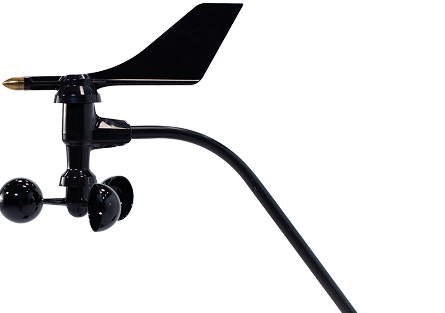
The Pulse of the Sky
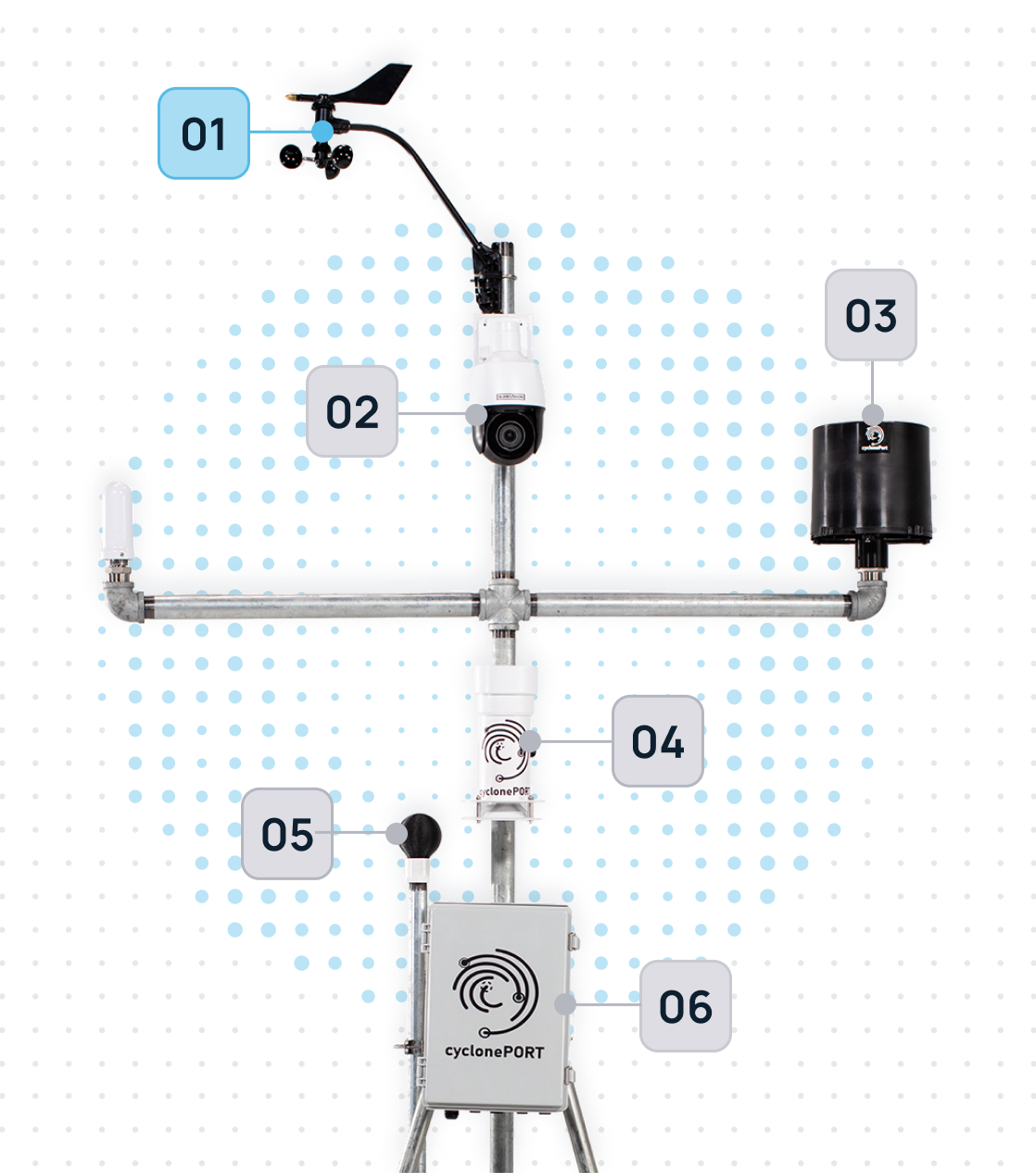
The anemometer is the “nervous system” of our weather stations. Moving beyond old-fashioned mechanical cups, our hardware utilizes ultrasonic sensor arrays to measure the velocity and direction of the wind. By calculating the time it takes for sound pulses to travel between sensors, it provides a lag-free, high-definition map of air movement.
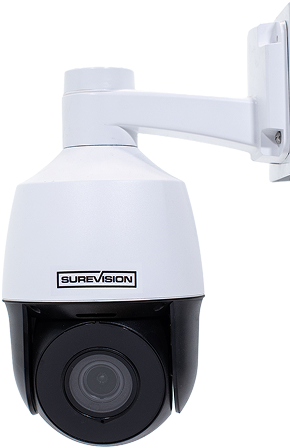
The PTZ Observation Unit
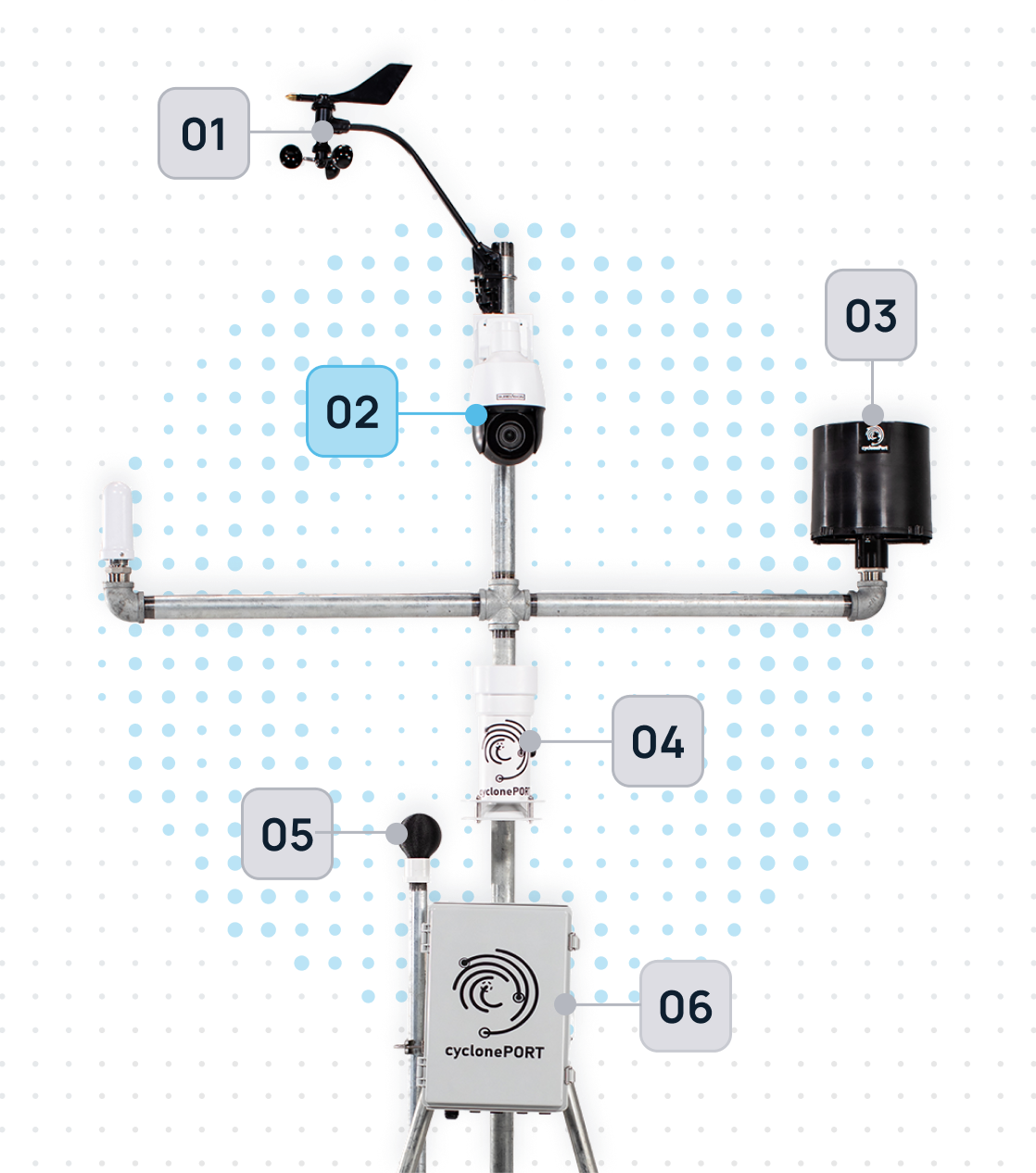
Our PTZ units are ruggedized optical sensors designed to withstand the very conditions they are monitoring. These aren’t just for recording video; they serve as a critical layer of visual ground-truthing. When our sensors detect a change in wind speed or pressure, the PTZ camera can automatically swivel to the point of interest—allowing us to see the formation of wall clouds, debris, or precipitation in real-time.
The lens moves vertically, allowing for a look at both high-altitude cloud formations and ground-level impacts
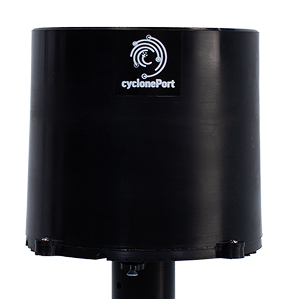
Liquid Precision: The Smart Rain Gauge
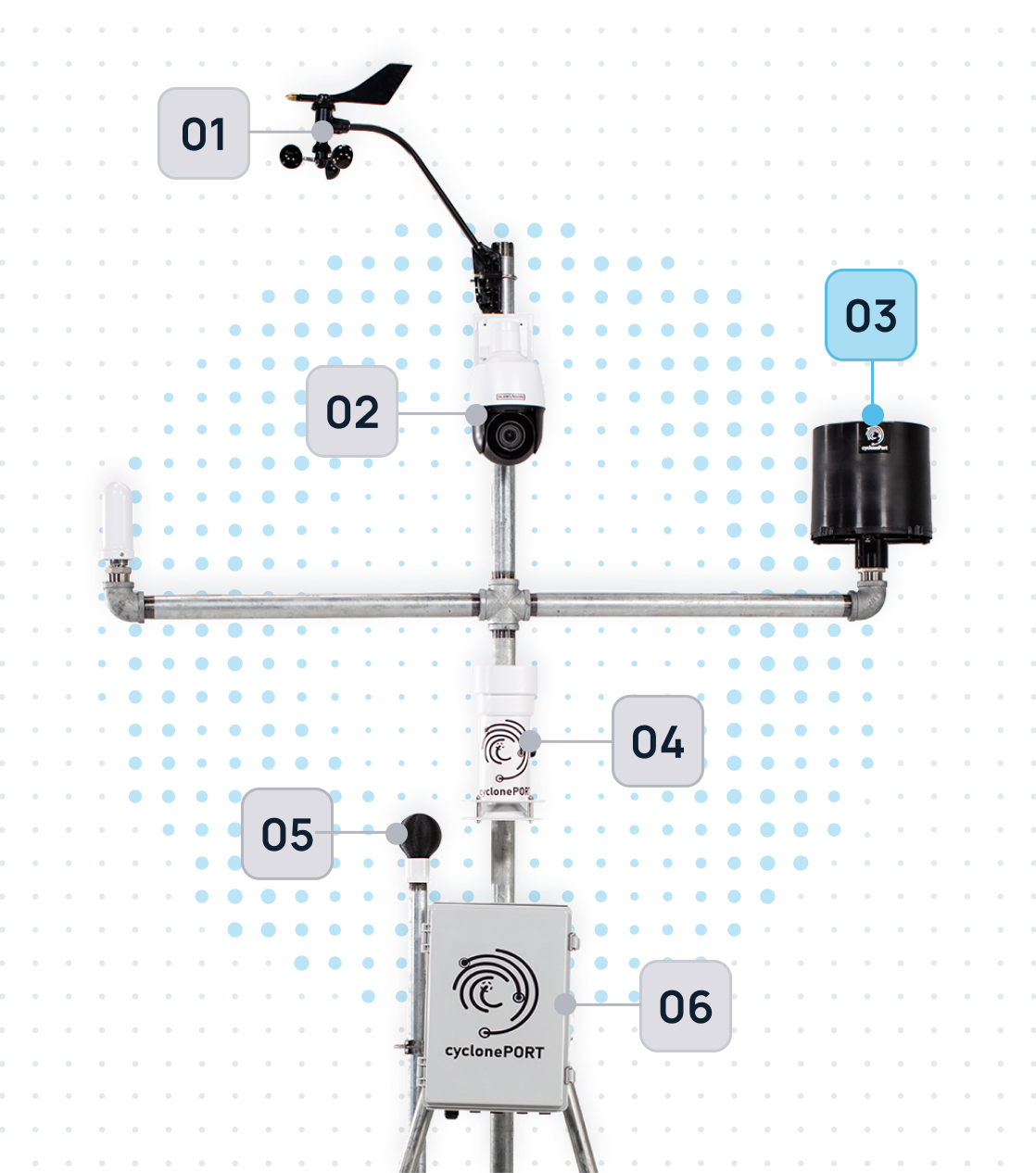
The rain gauge is the primary component for measuring precipitation intensity and accumulation. Our systems typically utilize “Tipping Bucket” or “Optical” technology to provide high-resolution data. As droplets enter the collector, the sensor logs the volume in real-time, allowing our AI to calculate rainfall rates per minute.
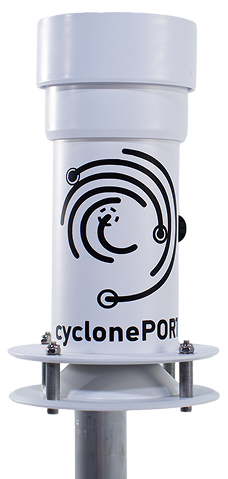
Resilience by Design: The Primary Sensor Housing
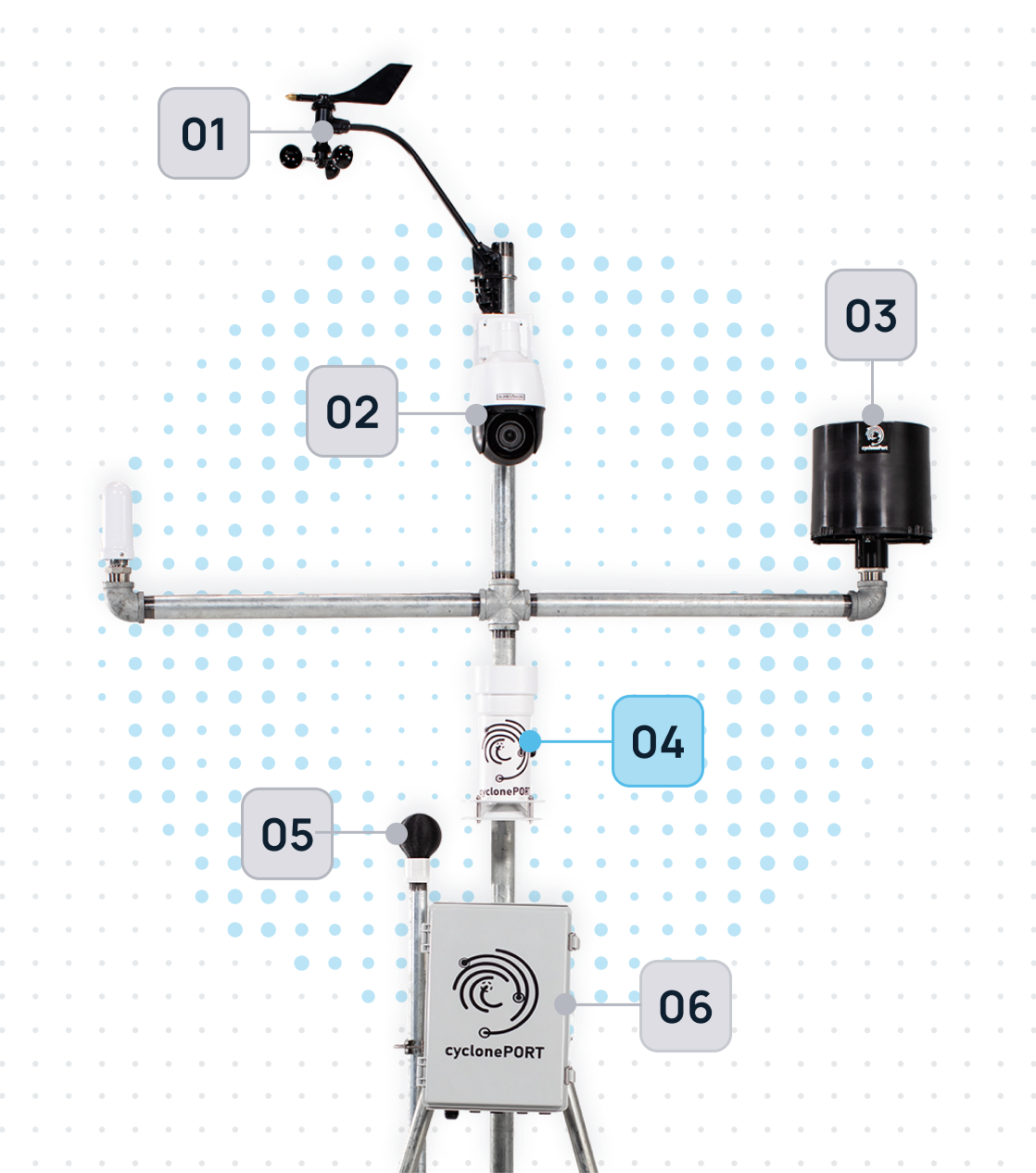
The Primary Sensor Housing is the ruggedized enclosure that integrates and protects the suite of meteorological instruments. It isn’t just a box; it is a precision-engineered environment. Designed with aerodynamic stability and thermal regulation, it ensures that internal components—like barometers, data loggers, and transmission hardware—stay dry, cool, and connected even in hurricane-force winds or sub-zero blizzards.
Human-Centric Heat Intelligence
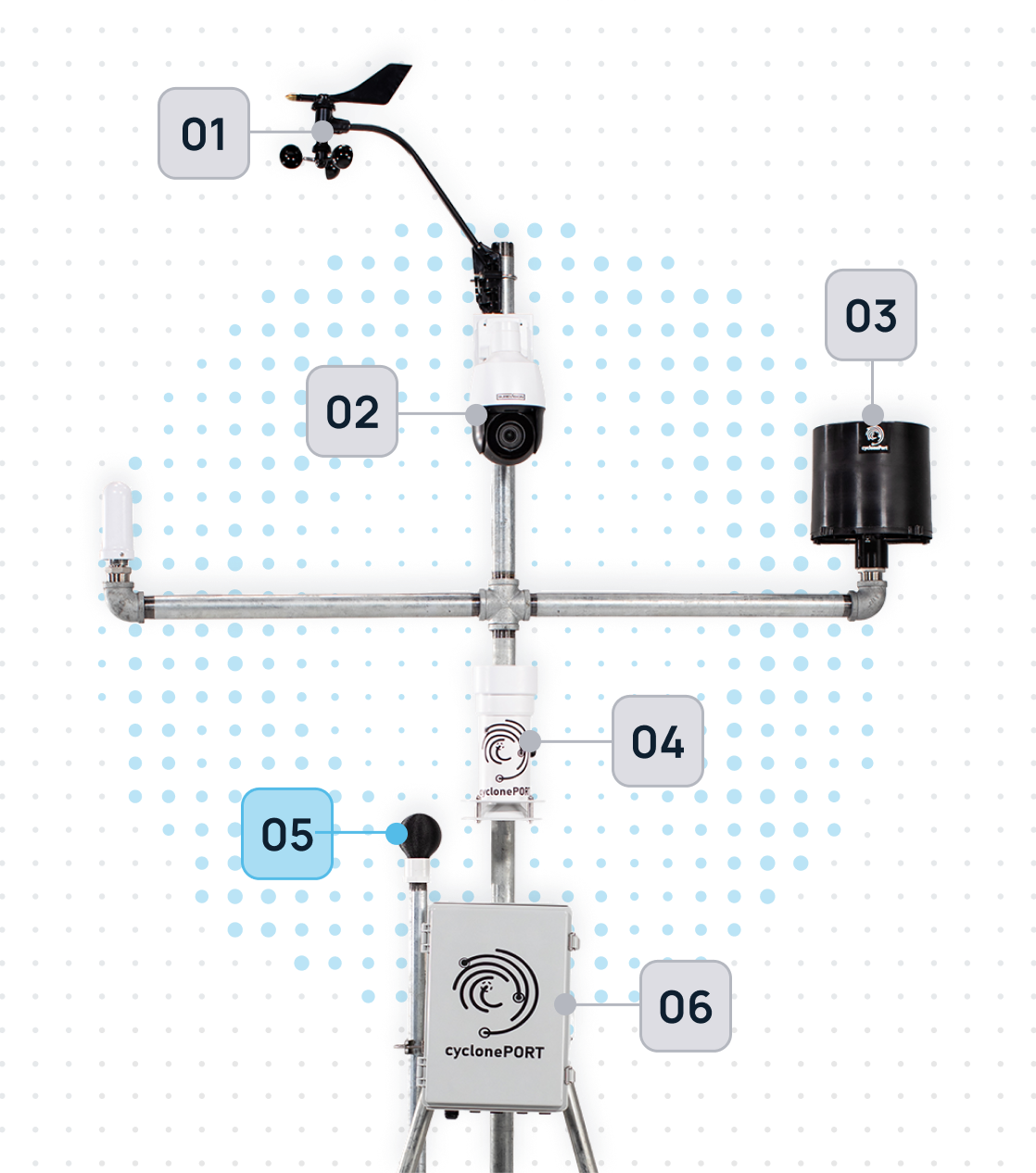
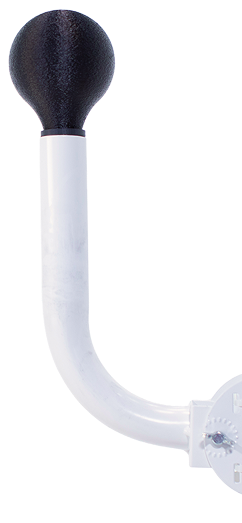
The Wet Bulb Globe is the “biometric” sensor of our weather stations. It doesn’t just measure ambient air; it accounts for the three-way punch of temperature, humidity, and solar radiation. By simulating how a human being absorbs heat while sweating in direct sunlight, it provides the Wet Bulb Globe Temperature (WBGT)—the most accurate metric for predicting heat exhaustion and sunstroke.
For companies managing outdoor crews, sports events, or high-load data centers, this sensor is the definitive “go/no-go” signal for safety.
The Intelligence Engine: CyclonePORT Hub
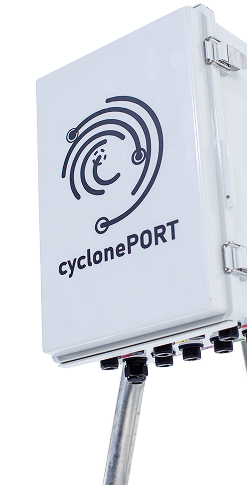
The CyclonePORT Hub is the central nervous system of our weather monitoring architecture. It serves as the high-speed bridge between raw environmental data and actionable cloud intelligence. While our sensors are busy “feeling” the storm, the Hub is busy translating those signals, encrypting the data, and ensuring it reaches our forecasting models in milliseconds—even when local power grids or traditional networks fail.
It is designed for “Edge Computing,” meaning it processes critical data locally to provide instant alerts before the information even hits the cloud.
Regulatory & Standards Alignment for Agricultural Operations
cyclonePORT supports compliance with the federal and state standards most relevant to farm operations and agricultural labor safety:
- OSHA 29 CFR 1928.110 — Field Sanitation and Heat Illness Prevention for agricultural workers
- EPA Worker Protection Standard (WPS) — weather-related restricted entry intervals and application conditions
- USDA Farm Service Agency (FSA) — crop loss documentation and weather data requirements for disaster programs
- USDA Risk Management Agency (RMA) — crop insurance documentation and prevented planting weather verification
- FIFRA pesticide label compliance — wind speed and environmental condition requirements at time of application
- State Department of Agriculture spray application recordkeeping requirements
Common Use Cases
Spray Application Window Optimization
Commercial applicators and farm operators need verified, on-site weather data at the time of application to comply with pesticide label requirements and protect against drift liability. cyclonePORT’s wind speed, wind direction, temperature, and humidity sensors provide real-time go/no-go data for every spray window — and log the conditions at the time of application for recordkeeping.
Frost and Freeze Protection for Specialty Crops
Fruit, vegetable, and nursery operations face significant revenue risk from late-season frost events. A cyclonePORT agricultural weather station with configurable temperature threshold alerts gives growers the advance notice needed to activate overhead irrigation, wind machines, or row covers before temperatures drop to damaging levels — not after the crop is already affected.
Livestock Heat Stress and Lightning Safety
Confined feeding operations, poultry houses, and open-range livestock producers face both heat stress and lightning risk during summer thunderstorm season. cyclonePORT monitors temperature, humidity, and heat index for livestock comfort and OSHA compliance, while lightning detection alerts farm managers to incoming thunderstorms that put outdoor workers and animals at risk.
Crop Insurance and USDA Documentation
Weather-related crop loss claims through USDA’s Risk Management Agency require verifiable weather data at the farm location. A cyclonePORT agricultural weather station provides the timestamped, logged precipitation, temperature, and event data that supports RMA documentation — a significant advantage over relying on the nearest public weather station, which may not reflect conditions at your specific fields.
One Station, Whole-Farm Intelligence
cyclonePORT’s cloud-based dashboard and RadarOmega app integration give farm managers, agronomists, and crop consultants access to real-time and historical farm weather data from any device — in the field, at the office, or away from the operation.
Multiple units can be deployed across large or geographically varied operations to capture conditions in different fields, watersheds, or microclimates.
Platform Features at a Glance
| Specification | Detail |
| Deployment | Permanent field mount — fence post, equipment shed, barn, grain bin |
| Power | Solar + battery backup — no grid required in remote field locations |
| Connectivity | Cellular, Wi-Fi, or satellite — works in rural and remote ag environments |
| Data Access | Cloud dashboard + RadarOmega app — farm manager, agronomist, consultant access |
| Alert System | Frost, heat, wind, lightning, and precip threshold alerts via app |
| Data Logging | Continuous timestamped archive — crop insurance, USDA, and OSHA documentation |
| Multi-Site | Monitor multiple field locations from one farm account |
| Sensor Accuracy | Professional-grade calibrated instruments — not consumer-grade accuracy |
When Seconds Decide Outcomes
A county emergency management agency detected rotation
Emergency crews coordinated faster with shared data
Frequently Asked Questions
How is a cyclonePORT farm weather station different from a consumer weather station?
Can cyclonePORT data support a crop insurance prevented planting or loss claim?
Can I set alerts for frost risk so I know when to activate freeze protection?
Our operation spans multiple fields across several miles. Can cyclonePORT cover all of them?
Put a Professional Farm Weather Station on Your Operation
Talk to our team about agricultural deployments, multi-field configurations, and crop insurance documentation support.
cycloneport.com/contact | info@cycloneport.com | 844-737-9328