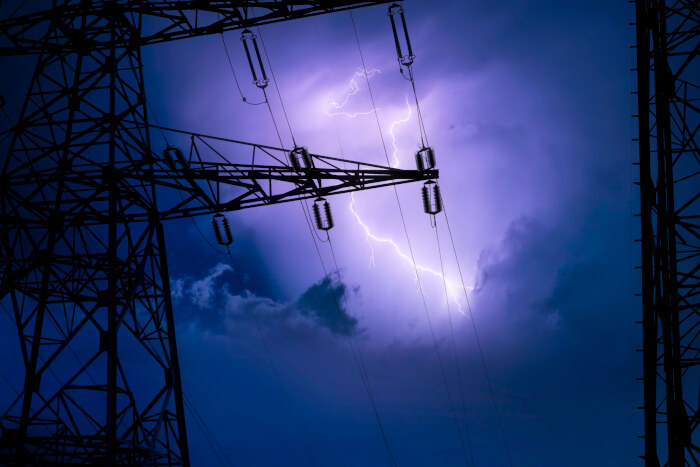
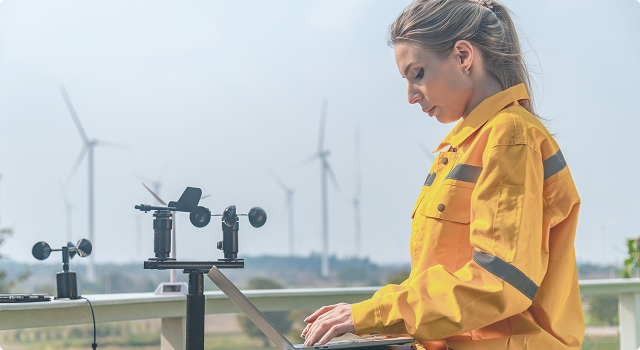
Lightning Detection System
Professional lightning detection, alerting, and warning for weather surveillance networks — delivering real-time cloud-to-ground strike data, location-specific alerts, and all-clear notifications for athletic programs, outdoor facilities, construction sites, utilities, and emergency management operations.
Contents
01 The Instrument — What Lightning Detection Measures and Why It Matters
02 How Lightning Detection Works — Sensor Technology
03 Detection vs. Prediction — Understanding the Distinction
04 Lightning Safety Standards & the 30/30 Rule
05 Operational Applications — Sports Fields, Golf Courses & Beyond
06 Instrument Selection Guide — What Separates Professional Systems
07 Installation, Alerting & Maintenance
08 cyclonePort Lightning Detection System — Platform, Integration & Deployment
09 Frequently Asked Questions

- Cloud-to-Ground
- Up to 25 mi
- 30 Seconds
- RadarOmega
01 The Instrument — What Lightning Detection Measures and Why It Matters
A lightning detection system identifies, locates, and characterizes lightning strikes — both cloud-to-ground and in-cloud — using the electromagnetic signals that lightning discharges produce. In a professional weather surveillance deployment, lightning detection is integrated with the station’s sensor suite to deliver real-time strike data, lightning alerts, and all-clear notifications.
Lightning is one of the most time-sensitive weather hazards that outdoor operations must manage. A lightning threat can develop and reach a site much quicker than other hazards. The consequences of a delayed response are immediate and irreversible. A professional lightning detection system removes human judgment latency from the equation: when a strike occurs within the configured warning radius, the system alerts without waiting for someone to notice, check a phone, or make a call.
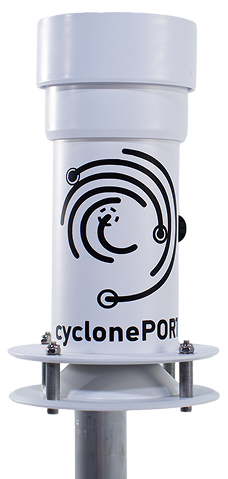
In a cyclonePort weather monitoring system, the lightning detection module operates continuously alongside wind, temperature, humidity, rain gauge, barometric pressure, and camera feeds. Lightning strike data flows directly into RadarOmega, where users can configure live monitoring, notifications, and all-clear thresholds.
02 How Lightning Detection Works — Sensor Technology
All practical lightning detection systems exploit the fact that a lightning discharge produces a strong, characteristic electromagnetic pulse — a brief burst of radio energy across a wide frequency range. The fundamental challenge is detecting this pulse, determining where it originated, and doing so accurately enough to be operationally useful.
Radio Frequency (RF) Detection — The Network Standard
The dominant technology in professional lightning detection networks is radio frequency (RF) sensing. When lightning occurs, it radiates electromagnetic energy across a broad spectrum — detectable from VLF (very low frequency, <30 kHz) through HF (high frequency, up to 30 MHz) and beyond. The physics: rapid electron acceleration along ionized lightning channels produces electromagnetic bursts with peak currents reaching up to 200 kiloamperes (kA) — generating signals strong enough to be detected by properly equipped antenna stations hundreds of miles away. A complete lightning flash consists of multiple strokes as return current surges up the ionized channel repeatedly. Ground-based antenna stations record these pulses and their precise arrival times.
With a single sensor, only the approximate direction and rough distance of a strike can be estimated. With a network of at least three to four sensors, time-of-arrival differences between stations allow the system to triangulate the precise strike location.
Cloud-to-ground vs. in-cloud lightning — and why both matter Cloud-to-ground (CG) lightning — the visible bolt that connects a storm to the earth’s surface — is the most dangerous type for people and infrastructure, and the primary focus of safety-critical detection. In-cloud (IC) lightning occurs within the storm cloud. Advanced detection networks that capture both CG and IC lightning can identify increasing storm intensity earlier: IC flash rates typically surge before heavy precipitation and the first CG strikes arrive — providing additional lead time compared to CG-only detection systems. Monitoring lightning flash rate — the frequency of total lightning per minute — is a great indicator of storm intensification and potential severe weather, giving operations teams a heads up earlier over waiting for ground strikes alone. |
Electric Field Mill Sensing — Pre-Strike Warning
A complementary detection approach uses an electric field mill — a rotating sensor that measures the strength of the local electrostatic field generated by charged thunderstorm clouds. As a storm develops and the charge separation within the cloud increases, the electric field at ground level intensifies. A field mill can detect this field intensification before any lightning has actually struck — potentially providing evidence of imminent lightning risk before the first discharge occurs.
The main limitation of field-mill sensing is that it reflects local electrical conditions rather than precise strike location, and its operational usefulness is greatest for nearby storm electrification rather than distant activity. For sites where early detection is especially important, field-mill data can complement RF lightning detection by adding local pre-strike awareness to network-based strike detection and location information.
What the System Detects and Reports
- Cloud-to-ground (CG) strike location — latitude and longitude of each strike to sub-kilometer accuracy
- Strike distance from site — real-time distance in miles from the monitored location, updated with each new strike
- Strike intensity — peak current (kiloamps) of each CG return stroke
- In-cloud (IC) lightning activity — available via total lightning network integration for advanced storm intensity assessment
- Strike trend and storm motion — frequency of strikes per minute, directional movement of the storm cell toward or away from the site
- Alert status — active warning vs. all-clear, with timestamp documentation for compliance records
03 Detection vs. Prediction — Understanding the Distinction
A critical distinction in lightning safety is that lightning risk can be monitored and detected, but the exact time and location of an individual lightning strike cannot currently be predicted with operational certainty. This reflects both the complexity of lightning initiation physics and the practical limits of present-day observing and forecasting systems.
What Detection Means
A lightning detection system identifies and locates actual lightning discharges after they occur by sensing the electromagnetic signals generated by the discharge. Depending on the network and sensing method, this may include cloud-to-ground lightning and some in-cloud activity. Modern RF lightning networks can provide high detection efficiency and rapid reporting, often delivering event information within seconds, though exact performance depends on the network design, sensor geometry, and lightning type.
What Prediction Cannot Do
No operational system can reliably predict that lightning will occur at a specific location at a specific time. Products marketed as “lightning prediction” systems generally detect local atmospheric electric field buildup or related pre-convective electrical conditions, which may indicate elevated lightning risk but do not establish certainty. Storm electric fields can become strong without producing a local strike, and the first lightning from a storm can also occur before any single local field threshold provides a dependable warning.
Why This Matters for Your Safety Protocol
A detection-based system provides the highest confidence in its detection outputs: a detected strike means lightning has actually been detected in your area, not that conditions might be developing. False alarm rates in detection-based systems are far lower than in prediction-based systems, which means people take alerts seriously and respond appropriately rather than becoming desensitized to frequent false alerts.
cyclonePort’s lightning detection system alerts when confirmed strikes occur within the configured distance radius. All-clear notifications are issued only when confirmed detection ceases for the duration required by the user-set all-clear interval.
04 Lightning Safety Standards & the 30/30 Rule
Lightning safety for outdoor operations is guided by a combination of widely used recommendations, organizational policies, and application-specific procedures. Although the details vary, most protocols follow the same basic principles: identify when lightning is close enough to pose a threat, suspend exposed activity, and wait an appropriate all-clear interval before resuming.
The 30/30 Rule — The Universal Framework
The 30/30 rule is a widely used traditional lightning safety guideline for outdoor activity. It is simple: if the time between a lightning flash and the sound of thunder is 30 seconds or less, move to substantial shelter, and wait 30 minutes after the last thunder before resuming activity.
In modern operational settings, this rule is often supplemented or replaced by lightning-detection protocols that use configured strike-distance thresholds and automated all-clear timers. The underlying principle is the same: suspend exposed activity when lightning is close enough to pose a threat, move people to substantial shelter, and do not resume until the hazard window has passed.
| The 30/30 Lightning Safety Rule |
| SUSPEND: Stop all outdoor activity immediately when thunder is heard within 30 seconds of a lightning flash, OR when a lightning detection system reports a strike within the defined warning radius. |
| SHELTER: Move all participants to a designated substantial shelter — a building with plumbing and wiring, or a fully enclosed metal vehicle. Covered bleachers, dugouts, and open pavilions are NOT safe shelters. |
| WAIT: Resume activity only after the selected all-clear interval has passed since the last thunder or last in-range detected lightning event. A 30-minute wait is widely used in public safety guidance. |
| NOTE: The 30-minute clock restarts from zero with every new confirmed lightning event within range. A storm that produces one strike every 20 minutes can keep a facility cleared for hours. |
Why 30 Minutes?
The 30-minute all-clear interval is used as a conservative lightning-safety buffer after the last thunder heard or the last nearby detected strike. It is intended to reduce the risk from lingering or redeveloping electrical activity, since thunderstorms can continue to produce lightning even after the main core appears to be moving away.
For operational programs, the value of an automated lightning-detection system is not just the alert itself, but the consistent timing and documentation of the all-clear interval. A dedicated station can timestamp each qualifying lightning event and reset the countdown automatically when new activity occurs. Consumer weather apps may be useful for general awareness, but they may not provide the same site-specific control, documented timing logic, or integration with formal safety protocols that cyclonePort stations do.
05 Operational Applications
Lightning Detection System for Sports Fields
Lightning is the most acute and time-sensitive weather hazard for outdoor athletic programs. A lightning threat can develop and reach a sports field within minutes, leaving insufficient time for safe evacuation if monitoring begins only after the threat is visible or audible. Educational settings account for a very high volume of lightning-related injuries, making school athletic programs one of the highest-risk contexts for lightning exposure and one of the most important deployment environments for professional detection systems.
A professional lightning detection system for sports fields must do three things automatically: detect strikes as they occur within the warning radius, alert all responsible parties instantly, and document the full event timeline for liability protection. A cyclonePort station at the athletic venue accomplishes all three continuously — without requiring a staff member to actively monitor conditions.
- High school and middle school athletics: NFHS guidelines require suspension when lightning is detected within 10 miles. A cyclonePort station configured to the NFHS 10-mile standard triggers immediate SMS and/or push notification alerts to athletic directors, coaches, and trainers the moment a qualifying strike is detected.
- Football, soccer, and multi-sport complexes: Open fields with no natural shelter expose players to direct strike risk. Lightning detection gives the lead time needed to move players, coaches, and spectators to designated safe locations.
- Track and field: Long-distance events spread athletes across large areas, making rapid evacuation logistically challenging. Lightning detection with alerts for user-specified zones provides an effective evacuation protocol.
- Marching band and outdoor performing arts: GHSA now requires WBGT monitoring for marching band; lightning policy applies equally. A cyclonePort station covers both heat stress and lightning detection from a single platform.
- School district networks: A single cyclonePort account managing stations at multiple campuses allows the district safety officer to monitor all facilities simultaneously — seeing lightning distance for every field in real time from one dashboard.
Lightning Detection System for Golf Courses
Golf courses present a distinctive combination of lightning risk factors that make dedicated on-site detection essential rather than optional. Golfers are dispersed across 100–200 acres of open terrain, often far from the clubhouse. The course is dotted with isolated trees, elevated tee boxes, and exposed water features — all elevated lightning hazard locations. Golfers are frequently absorbed in their game and may not notice a developing storm until it has already reached dangerous proximity.
Golf and soccer rank as the top sports-related lightning fatality categories in the United States over the period from 2006 through 2024. The good news: NOAA has documented a 75% reduction in golf-course lightning deaths since organized lightning awareness campaigns and systematic course monitoring began — demonstrating that the risk is manageable with the right systems in place.
- Advance warning: A lightning detection system for golf courses configured to alert at 8–10 miles provides course managers the ability to stay on top of immediate lightning threats — lightning can and does strike several miles away from the main storm, so the alert is not “before conditions become dangerous” but “the moment conditions become dangerous.” Course managers can then clear players from remote holes via marshals, PA systems, and horn signals.
- Course-wide notification: cyclonePort integrates with on-site siren and strobe alerting systems. A single detection event can simultaneously trigger an audible horn across the course, a PA announcement in the clubhouse, SMS alerts to ranger carts, and notification to course management.
- Automated all-clear: The 30-minute all-clear clock runs automatically. When conditions are safe, an all-clear notification is issued without requiring manual weather monitoring — allowing course operations to resume promptly.
- Integration with existing horn systems: cyclonePort’s relay output integrates with existing on-course warning horn systems, replacing manual activation with automated, detection-triggered alerts.
Construction Sites and Outdoor Worksites
Construction is among the highest-risk occupations for lightning fatalities, ranking alongside agriculture as the leading work-related lightning death category. Workers on elevated steel structures, scaffolding, rooftops, and cranes are at direct exposure risk. OSHA’s 30/30 rule requires all outdoor workers to reach shelter when thunder is heard within 30 seconds of lightning — but by that point, the storm is already within 6 miles and the time window for safe movement may be critically short.
A cyclonePort lightning detection system at the worksite provides advance warning at user-defined distances — typically 8–10 miles for high-risk operations — giving workers time to secure equipment, descend from elevated positions, and reach shelter well before the storm arrives. The timestamped detection log documents when warnings were issued and when all-clear was given, providing the OSHA compliance record that protects both workers and employers.
Utilities and Power Infrastructure
Lightning is the leading cause of power outage events in the United States, causing over $1 billion in utility infrastructure damage annually. For electric utilities, real-time lightning data serves two distinct operational functions: immediate crew safety (personnel working on or near energized equipment must clear the area when lightning is within the operating safety radius) and storm damage assessment (strike location data helps prioritize post-storm damage assessment and dispatch crews to areas with confirmed strike activity near infrastructure corridors).
Dry lightning — strikes that occur without accompanying rainfall — is responsible for approximately 30% of wildfires in the United States. Standard weather radar shows precipitation and storm structure but cannot detect dry lightning, which produces no radar signature and can ignite fires miles from any visible storm. For utilities operating in fire-prone areas, on-site lightning detection that covers the entire lightning spectrum is the only reliable way to identify dry lightning events and initiate immediate fire watch protocols along vegetation corridors near transmission infrastructure.
cyclonePort stations along transmission and distribution corridors provide continuous lightning monitoring with real-time strike maps accessible to dispatch and operations centers. After a storm event, the RadarOmega platform provides the complete strike history — location, time, and intensity — that guides where crews go first.
Emergency Management and Public Events
Emergency management agencies, parks departments, and large event operators use lightning detection to make evacuation decisions for public spaces — athletic tournaments, festivals, concerts, and outdoor municipal facilities. The challenge is scale: clearing a stadium, fairground, or multi-field tournament complex involves thousands of people and requires more lead time than clearing a single sports team.
cyclonePort supports multi-site networks where a single account can monitor lightning for multiple facilities simultaneously — allowing a county emergency manager to view real-time strike data for every park, school, and public venue in the district from a single RadarOmega dashboard, with automated alerts dispatching to venue staff the moment lightning enters the configured radius for each location.
06 Instrument Selection Guide — What Separates Professional Systems
Lightning detection systems vary enormously in their data source, accuracy, alert latency, and operational reliability. These are the criteria that determine whether a system provides actionable safety intelligence or a false sense of security.
| Specification | What to Require |
|---|---|
| Data Source | The most important factor. Professional systems use national lightning detection network data (NLDN or equivalent) with triangulated strike locations — not single-point estimates, not radar-derived approximations. Verify the network behind the data, not just the alerting interface. |
| Detection Type | Cloud-to-ground (CG) detection is the minimum requirement. Systems with total lightning (CG + in-cloud) capability provide earlier storm intensity signals. Verify whether the quoted detection efficiency applies to CG lightning, IC lightning, or both. |
| Alert Latency | Time from strike to alert delivery to responsible parties. Professional systems achieve this in under 30 seconds. Systems relying on radar or delayed data feeds can lag by 2–5 minutes — an eternity when a storm is approaching at 25 mph. |
| Warning Distance Configuration | The system must allow configuration of the warning radius to match your governing body’s standard — 5, 8, or 10 miles depending on the facility and applicable policy. Rigid systems that do not allow this configuration cannot meet all compliance requirements. |
| All-Clear Automation | Manually issued all-clears require someone to actively monitor conditions and make a judgment call. Automated all-clear systems issue the notification only after a verified 30-minute (or policy-defined) window of no in-range detection — which is the correct protocol and produces a defensible documentation record. |
| Alert Channel Redundancy | Critical alerts must reach responsible parties through multiple channels simultaneously: SMS, push notification, on-site siren relay output. If any single channel fails, others must deliver the alert. Verify the redundancy architecture of any system used for life-safety decisions. |
| Documentation & Export | Every strike detection, alert issuance, and all-clear notification must be logged with a timestamp and exportable for compliance documentation. Systems that do not archive this data expose operators to significant liability in post-incident review. |
| Platform Integration | A lightning-only standalone device has limited operational value. Lightning detection integrated with wind speed, rain gauge, WBGT, temperature, and high-resolution camera feeds — all in the same platform — is what transforms lightning detection from a single-hazard device into a comprehensive weather safety system. |
| False Alarm Rate | High false alarm rates cause alert fatigue — people stop responding to alerts, defeating the purpose of the system. Detection-based systems using verified national network data have significantly lower false alarm rates than electrostatic prediction-only systems. |
07 Installation, Alerting & Maintenance
Installation and Siting
Unlike anemometers or WBGT sensors, lightning detection systems that rely on national network RF data do not require specific positioning relative to the monitored site — the sensor network covers the region, and the cyclonePort platform applies that data to your site coordinates. What matters is that the station has reliable power and connectivity for continuous operation, and that the site coordinates configured in RadarOmega accurately represent the location to be protected.
- Site location accuracy: Verify the site GPS coordinates entered in RadarOmega match the actual center of the activity area — the sports field, golf course center, or worksite perimeter — not the equipment shed or parking lot. A 200-meter coordinate error can affect which strikes fall inside or outside the warning radius.
- Connectivity redundancy: Lightning detection is most critical during active storm conditions — exactly when cellular connectivity may be degraded or interrupted. Verify that the station has primary and backup connectivity options for storm-condition reliability.
- Power continuity: cyclonePort stations should have battery backup or UPS capability to maintain detection and alerting during grid power outages, which frequently occur during the same storms that produce lightning.
- On-site siren/strobe output: Where audible and visual warning devices are required — golf courses, multi-field athletic complexes, large outdoor venues — cyclonePort’s relay output connects to compatible horn, siren, and strobe systems.
Alert Configuration
With cyclonePort, the RadarOmega platform allows operators to configure lightning alert parameters for independent locations. Below is an example of a three-tier alert architecture that can be used by facility operators:
| Alert Tier | Distance & Required Action |
|---|---|
| Alert (20 miles) | Notify key stakeholders — athletic directors, safety officers, course management — that a lightning threat is developing and may require action. Preparation phase: verify shelter locations are accessible, brief staff. |
| Pause / Suspend (10 miles) | Suspend outdoor activities. All participants must move toward designated safe shelter. All-clear clock begins tracking. |
| Evacuate (5 miles) | Immediate shelter required. Anyone still outdoors must reach substantial shelter without delay. On-site siren/horn relay activates. Clock runs until 30 minutes past the last in-range detection. |
Maintenance
Lightning detection systems integrated with cyclonePort require minimal hardware-specific maintenance — the national RF sensor network requires no on-site maintenance from the operator. Station-level maintenance follows the same schedule as the broader cyclonePort weather station: periodic connectivity checks, power system inspection, and verification that alerts are being received correctly through system health monitoring in RadarOmega.
- Annual alert test: Conduct a test alert through RadarOmega at the beginning of each storm season to verify all configured recipients receive warnings through all configured channels.
- Recipient list review: Update alert recipients at the beginning of each season to reflect staff changes — a critical step that is frequently overlooked.
- Siren/strobe inspection: If on-site audible/visual warning devices are installed, test them at the beginning of each season for proper operation.
- Documentation review: Review and archive the previous season’s lightning event records, confirming all required retention periods are met for your applicable governing body.
08 cyclonePort Lightning Detection System
cyclonePort weather surveillance stations integrate lightning detection as a core module, delivering real-time strike data, alerting, and event records through the RadarOmega platform alongside all other weather surveillance data streams.
Technical Specifications
| Parameter | Specification |
|---|---|
| Detection Technology | RF-based network lightning detection via national lightning detection network integration |
| Strike Types Detected | Cloud-to-ground (CG) lightning; total lightning (CG + IC) available via enhanced network integration |
| Detection Radius | Configurable warning radius from 5 to 25+ miles from site coordinates |
| Location Accuracy | Sub-kilometer strike location from triangulated multi-station network data |
| Alert Latency | Typically under 30 seconds from strike to alert delivery |
| Data Update Rate | Continuous real-time; new strikes reported as detected |
| Warning Channels | SMS, push notification, on-site relay output (for siren/horn/strobe integration) |
| All-Clear Automation | Configurable all-clear interval (default 30 min) — issued automatically after no in-range detection for the defined period |
| Strike Data Recorded | Latitude/longitude, timestamp, distance from site, peak current (kA), polarity |
| Documentation | Full timestamped event log: warning issued, all-clear issued, each detected strike — exportable CSV/JSON |
| Compliance Support | NFHS 10-mile radius and 30-minute all-clear; OSHA 30/30 rule; custom configuration for any standard |
| Multi-Site Support | Single RadarOmega account monitors lightning across unlimited stations simultaneously |
| Data Transmission | Cellular, Wi-Fi, or Ethernet depending on station model |
| Power | Integrated into cyclonePort station power system; battery backup recommended for storm-critical deployments |
| Relay Output | Configurable relay for on-site siren, horn, and strobe light integration |
| Platform Integration | Lightning data displayed alongside wind, rain, temperature, humidity, WBGT, and camera feeds in RadarOmega |
Specifications may vary by model and network subscription. Contact cyclonePort for current engineering documentation.
What the System Delivers
- Real-time lightning strike detection — location, distance, and timestamp for every in-range strike
- Automated warning alerts — SMS, push notifications, and relay output the moment a strike is detected within the configured radius
- Automated all-clear notification — issued only after the configured all-clear interval elapses with no in-range detection
- Multi-station network view — monitor lightning simultaneously across all facilities from a single RadarOmega dashboard
- Combined weather datapoints — lightning alongside wind, rain, WBGT, humidity, temperature, pressure, and camera
- Remote access — all data and alert management accessible from any device via RadarOmega
Historical Analytics and Insurance Value
Lightning detection extends beyond real-time alerting into longer-term operational value. RadarOmega archives complete lightning event histories alongside all weather sensor data, enabling:
- Frequency analysis — number of lightning days per season, typical closest strike distance during major events, seasonal risk pattern identification
- Storm correlation — matching lightning event timelines with wind gusts, rainfall intensity, and WBGT readings from the same station for comprehensive post-event review
- Infrastructure planning — identifying which facilities or infrastructure corridors are statistically most exposed and prioritizing hardening investments accordingly
- Insurance documentation — historical lightning event records demonstrating active monitoring and documented safety response can support premium negotiations with facility and liability insurers, potentially reducing premiums by 10–20% for organizations with documented proactive safety protocols
Who Deploys cyclonePort Lightning Detection
| Sector | What cyclonePort Enables |
|---|---|
| School Districts & Athletics | Automated alerts to athletic directors, coaches, and trainers. |
| Golf Courses & Country Clubs | Course-wide lightning detection. Alert distribution to ranger carts, clubhouse staff, and management. |
| Colleges & Universities | Multi-campus lightning monitoring with location-specific alert configuration. Integration with campus safety systems and emergency notification platforms. |
| Construction Sites | Early detection for crane operators, roofing crews, and elevated work teams. |
| Utilities & Power | Lightning strike mapping along infrastructure corridors for crew safety and post-storm damage assessment. Real-time strike data for operations center situational awareness. |
| Events & Municipalities | Multi-venue lightning monitoring for parks, athletic complexes, and public events. Centralized dashboard for emergency managers overseeing multiple sites simultaneously. |
Deploy Lightning Detection at Your Facility cyclonePort lightning detection systems scale from a single facility to district-wide and county-wide networks. Contact our team to configure alerts, warning radius, all-clear protocols, and on-site siren integration. info@cycloneport.com · 844-737-9328 · cycloneport.com/contact |
09 Frequently Asked Questions
What is a lightning detection system and how does it work?
A lightning detection system senses the electromagnetic signals produced by lightning discharges and uses them to identify nearby lightning activity. In network-based systems, multiple sensors compare signal timing and related information to estimate where the discharge occurred.
What is the 30/30 lightning safety rule?
The 30/30 rule is a traditional safety guideline: seek substantial shelter if thunder follows lightning within 30 seconds, and wait 30 minutes after the last thunder before resuming outdoor activity.
How far away should lightning be detected before suspending outdoor activities?
That depends on the organization’s safety policy, available shelter, evacuation time, and the nature of the activity. Many programs use configured warning radii rather than relying only on flash-to-thunder counting.
What is the difference between a lightning detection system and a lightning prediction system?
Lightning detection reports actual detected lightning activity. “Prediction” systems usually estimate elevated risk from electrical field conditions but cannot predict the exact time and location of an individual strike with certainty.
Can a weather app or phone-based alert replace a professional lightning detection system?
Weather apps are useful for general awareness, but they may not provide the site-specific alerts, automated timing logic, or documented records needed for formal safety operations.
What documentation does cyclonePort provide for lightning compliance?
RadarOmega archives a complete, timestamped record of every lightning-related event: each strike detected within the warning radius (with location, distance, timestamp, and intensity), each warning alert issued, and each all-clear notification dispatched. This log is exportable as CSV or JSON for inclusion in compliance records, incident reports, or legal documentation. For school athletic programs operating under GHSA, NFHS, or state athletic association requirements, this automated documentation is far more defensible than manual records of who checked what at what time.
Can cyclonePort monitor lightning across multiple facilities from one account?
Yes. RadarOmega supports an unlimited number of stations under a single account, each with independently configured warning radii, alert recipients, and all-clear intervals. A school district can manage lightning detection for every campus simultaneously — the district safety officer sees a single dashboard showing the lightning distance from each facility in real time, while individual campus alerts go to facility-specific staff. A golf course management company can monitor all courses from one account. An emergency manager can oversee every park, athletic complex, and public venue in the county from a single view.
How is lightning detection different from other weather hazards in the cyclonePort system?
Lightning is unique among weather hazards in that the response decision — evacuate immediately — is binary and time-critical. Lightning at any distance within the warning radius requires immediate evacuation to substantial shelter. cyclonePort treats lightning detection with correspondingly high alert priority. All other sensor data from the same station — wind, rain, WBGT, temperature — remains available to operations teams during and after a lightning event through the same RadarOmega platform.
Related Instruments & Guides
Wind direction is one component of the complete cyclonePort weather station. Explore related instrument pages:
↗ Wind Meter & Anemometer — Wind speed, gust measurement, and Beaufort/Saffir-Simpson context
↗ Barometric Pressure Sensor — Pressure trend analysis for front detection alongside directional wind data
↗ Lightning Detection System — Lightning detection integrated with wind direction for complete storm awareness
↗ WBGT Monitor & Heat Stress Sensor — Heat stress monitoring with wind direction context for heat index and comfort
↗ Temperature Sensor — Air temperature monitoring alongside wind chill and heat index calculation
↗ Humidity Sensor & Hygrometer — Relative humidity and dew point with wind direction for air mass characterization
↗ Rain Gauge — Precipitation monitoring alongside wind direction for storm tracking and front passage documentation
Related Instruments & Guides
Lightning detection is one component of a complete cyclonePort weather surveillance system. Explore related instrument pages:
↗ WBGT Monitor & Heat Stress Sensor — Heat stress monitoring, GHSA compliance, and exertional heat illness prevention [link]
↗ Wind Meter & Anemometer — Real-time wind speed and gust monitoring for storm assessment and site safety [link]
↗ Rain Gauge — Precipitation monitoring for storm documentation and flash flood alerting [link]
↗ Humidity Sensor & Hygrometer — Relative humidity and dew point monitoring [link]
↗ Temperature Sensor — Air temperature and heat index monitoring [link]






Built for Severe Weather
Remote system management from anywhere
Deploy high-quality PTZ (Pan-Tilt-Zoom) IP cameras designed for effortless setup and immediate operation through plug-and-play simplicity. This advanced design significantly reduces installation time and complexity, making sophisticated surveillance accessible for businesses of all sizes. Multiple cameras connect seamlessly to the network.
Remote system management from anywhere
Deploy high-quality PTZ (Pan-Tilt-Zoom) IP cameras designed for effortless setup and immediate operation through plug-and-play simplicity. This advanced design significantly reduces installation time and complexity, making sophisticated surveillance accessible for businesses of all sizes. Multiple cameras connect seamlessly to the network.
Remote system management from anywhere
Deploy high-quality PTZ (Pan-Tilt-Zoom) IP cameras designed for effortless setup and immediate operation through plug-and-play simplicity. This advanced design significantly reduces installation time and complexity, making sophisticated surveillance accessible for businesses of all sizes. Multiple cameras connect seamlessly to the network.
Remote system management from anywhere
Deploy high-quality PTZ (Pan-Tilt-Zoom) IP cameras designed for effortless setup and immediate operation through plug-and-play simplicity. This advanced design significantly reduces installation time and complexity, making sophisticated surveillance accessible for businesses of all sizes. Multiple cameras connect seamlessly to the network.
Learn From The Field

- Guides
Cal/OSHA Heat Regulations for Outdoor Workers: What California Employers Must Know
- Guides
GCSAA Lightning Safety Guidance for Golf Courses: A Complete Compliance Guide