In the high-stakes world of emergency management, public safety, and critical infrastructure, decision-makers are often faced with a recurring dilemma: how do you manage assets and keep people safe when you can’t physically be everywhere at once?
Whether you are monitoring a university campus during a thunderstorm, managing a power grid during a high-wind event, or protecting a job site from sudden weather shifts, the answer lies in modern remote management. Operations Centers (EOCs) have evolved from simple communication hubs into powerful command centers, thanks to the ability to monitor, analyze, and react to real-time data from anywhere.
What is Remote Management, Really?
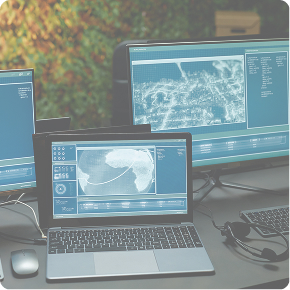
At its core, remote management from an operations center is about visibility. It’s the ability to bridge the gap between your desk and the field.
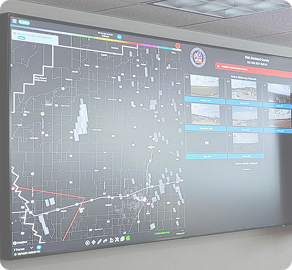
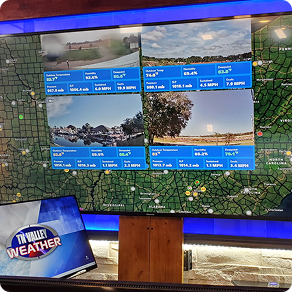
Traditionally, managing remote assets meant relying on generalized forecasts or waiting for on-the-ground reports. Today, that model has shifted. With systems like cyclonePORT, operations centers can pull in live, high-fidelity data—not just generic “weather info,” but hyper-local, real-time metrics including wind speeds, lightning strikes, and heat stress indexes (WBGT).
It isn’t just about reading numbers on a screen. It’s about visual ground-truthing. By utilizing ruggedized, remotely controlled cameras (PTZ units), operations center staff can see exactly what is happening in real-time, allowing them to confirm whether a developing storm is a localized threat or a passing shower.
Why Remote Management Changes the Game
1. Faster, Data-Driven Decisions When seconds decide outcomes, you don’t have time to wait for a phone call or a manual update. Remote management systems process data locally at the “edge,” delivering alerts to the operations center in milliseconds. This allows command teams to issue warnings or shift resources before a weather event escalates, rather than reacting after the damage is done.
2. Seamless Coordination One of the biggest hurdles in any emergency is the “silo” effect. With a centralized remote management platform, you can grant access to different teams—from utility crews to campus security or event coordinators—so everyone is looking at the same source of truth. When the EOC sees a threat, the teams in the field see it at the same time.
3. Safety Beyond Weather Remote management isn’t just for hurricanes or blizzards. For organizations managing heat-sensitive operations (like sports events or outdoor crews), monitoring metrics like Wet Bulb Globe Temperature (WBGT) remotely ensures that safety protocols are triggered exactly when needed. It takes the guesswork out of “go/no-go” decisions.
Taking Control from the Center
The true power of an operations center isn’t just in the equipment—it’s in the capability. By moving to a model of centralized, remote management, organizations shift from a posture of uncertainty to one of preparedness. You aren’t just watching the weather; you are actively managing your environment.
As we face increasingly unpredictable weather patterns, the ability to maintain situational awareness from the safety of an operations center is no longer a luxury—it’s an operational necessity. It allows organizations to protect their people, infrastructure, and outcomes with confidence, speed, and precision.